
Guide · Published
How to sit at a desk: a simple checklist
A step-by-step checklist for setting up your chair, screen, keyboard and breaks, plus quick desk movements that may help ease neck and back stiffness.
The short version
There is no single perfect way to sit. A good set-up makes a comfortable position easy, and regular movement matters more than holding one "ideal" posture all day. Use the checklist below, then change position often.
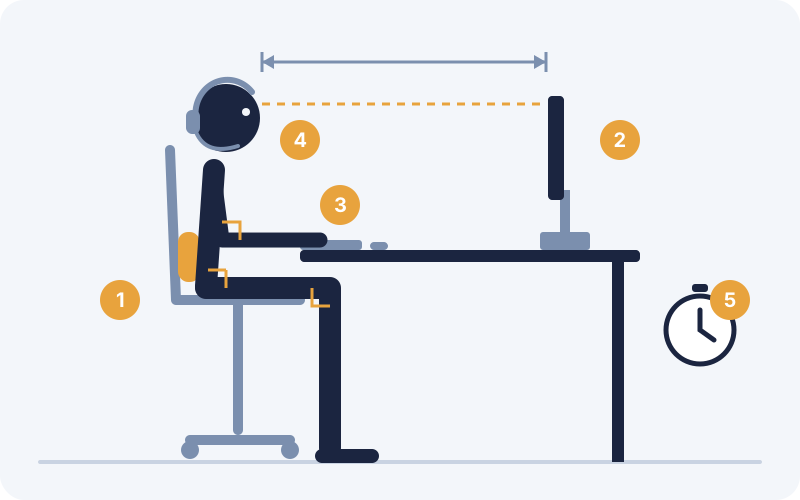
The numbers in the diagram match the steps below.
Step 1: your chair
- Height: feet flat on the floor (or on a footrest), thighs roughly horizontal, knees at about hip height.
- Depth: sit back so your lower back touches the backrest, leaving a gap of two to three fingers between the seat edge and the back of your knees.
- Back support: the backrest or a small cushion should support the curve of your lower back.
- Armrests: low enough that your shoulders stay relaxed, or move them out of the way.
Step 2: your screen
- About an arm's length away, directly in front of you, so you don't turn your head.
- The top of the screen roughly at eye level, so you look slightly down at the middle.
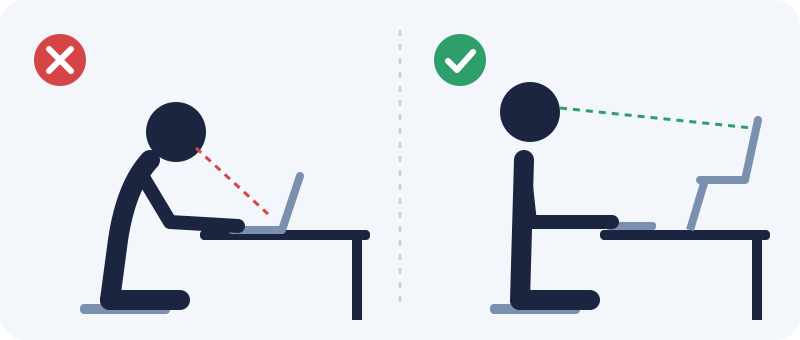
- On a laptop for long periods? Raise it on a stand or books and use a separate keyboard and mouse.
- Make text large enough to read without leaning in, and reduce glare from windows and lights.
Step 3: keyboard and mouse
- Keep them close, so your elbows rest near your sides at about 90 degrees.
- Forearms roughly horizontal, wrists straight rather than bent up or down.
- Keep the mouse next to the keyboard rather than out to the side.
Step 4: phone and documents
- Use a headset or speakerphone instead of holding the phone between ear and shoulder.
- Put papers you read often on a holder beside the screen, at a similar height.
Step 5: move little and often
- Change position or stand up for a minute or two about every 30 minutes.
- The 20-20-20 habit: every 20 minutes, look at something about 20 feet (6 metres) away for 20 seconds. It gives your eyes a rest and is a good reminder to roll your shoulders.
- Take calls standing, walk to a colleague, or use a printer or water point further away.
Quick desk movements
Move gently and within a comfortable range; stop if anything is painful.
- Chin tuck: sitting tall, slide your chin straight back (a "double chin"), hold 3 seconds, repeat 5 times.
- Shoulder rolls: roll your shoulders up, back and down 10 times.
- Neck side bend: tilt your ear towards your shoulder, hold 15–20 seconds each side.
- Seated rotation: sit tall, turn your upper body to one side holding the backrest, hold 10 seconds each way.
- Stand and lean back: stand, hands on your lower back, gently lean back 5 times.
When to get it checked
Many people notice desk-related stiffness eases within a few weeks of making changes like these. Consider booking an assessment if pain has not started to improve after two to three weeks, keeps coming back, spreads into an arm or leg, or comes with pins and needles or numbness. Our desk neck and back pain guide explains what to expect, and a 3D posture scan can show how your posture compares with the expected range. Outcomes vary from person to person.
Red flags: when to seek urgent help
- Call us for a same-day assessment if pain started after a fall or accident, is severe and not settling, or comes with a fever or unexplained weight loss.
- Go straight to A&E for more severe symptoms, such as a suspected broken bone or pain so severe it cannot wait.
- Call 999 for life-threatening signs: loss of bladder or bowel control, numbness around the groin or buttocks, chest pain, a sudden severe headache, or rapidly worsening weakness in your arms or legs.
Sources
This guide summarises the following public guidance. It is general information, not medical advice.
This guide is general information, not medical advice or a diagnosis. A clinician will assess you before recommending any treatment, and outcomes vary from person to person. Read our full disclaimer
Would you like it checked?
Book an initial assessment and we'll examine you, explain what we find and agree a plan together.
We accept most major health insurers. Please contact us before booking.