
Core treatments
Focused Shockwave Therapy (FSWT)
High-energy, non-invasive treatment for stubborn tendon and chronic pain problems such as plantar fasciitis and tennis elbow.
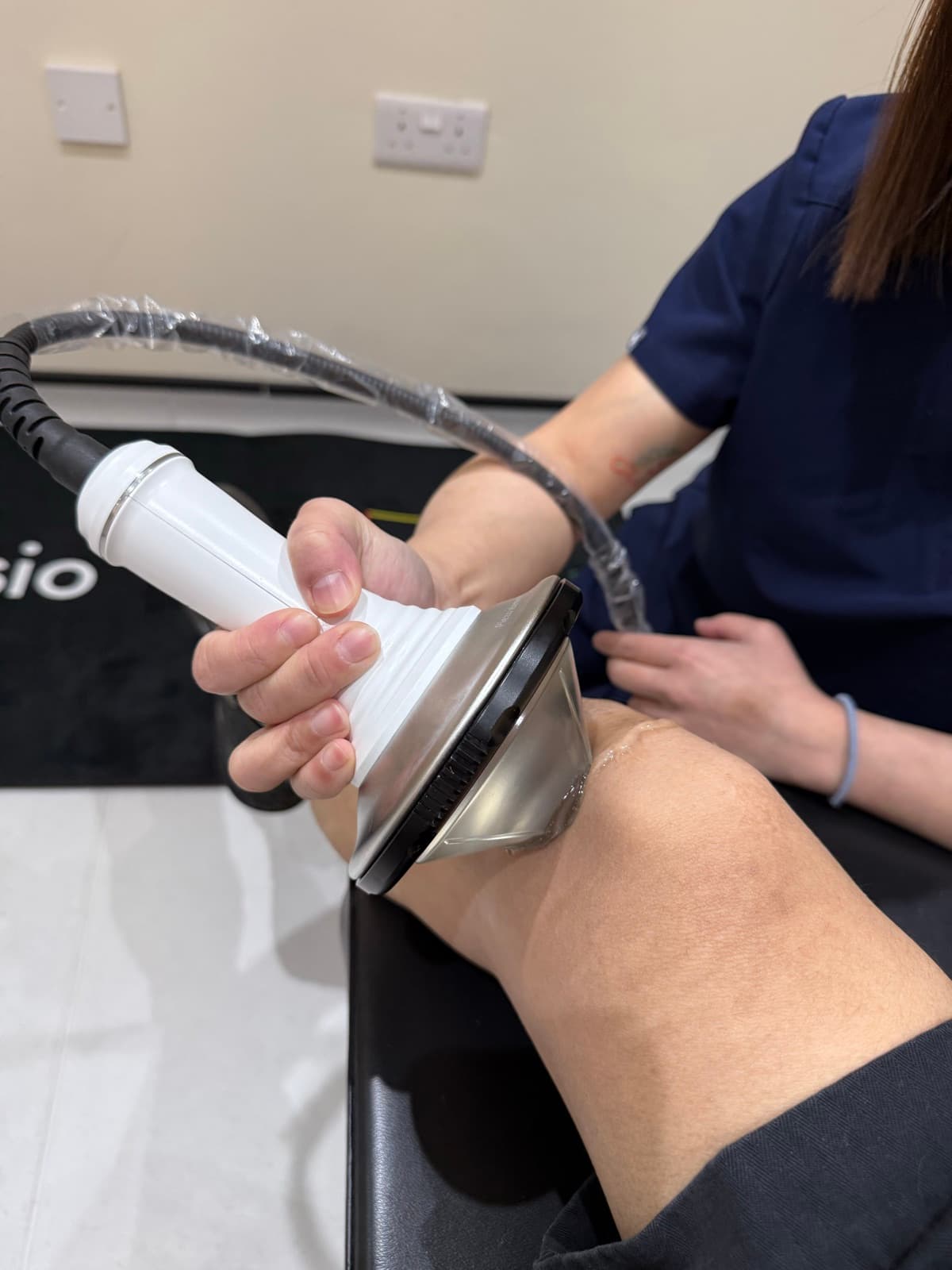
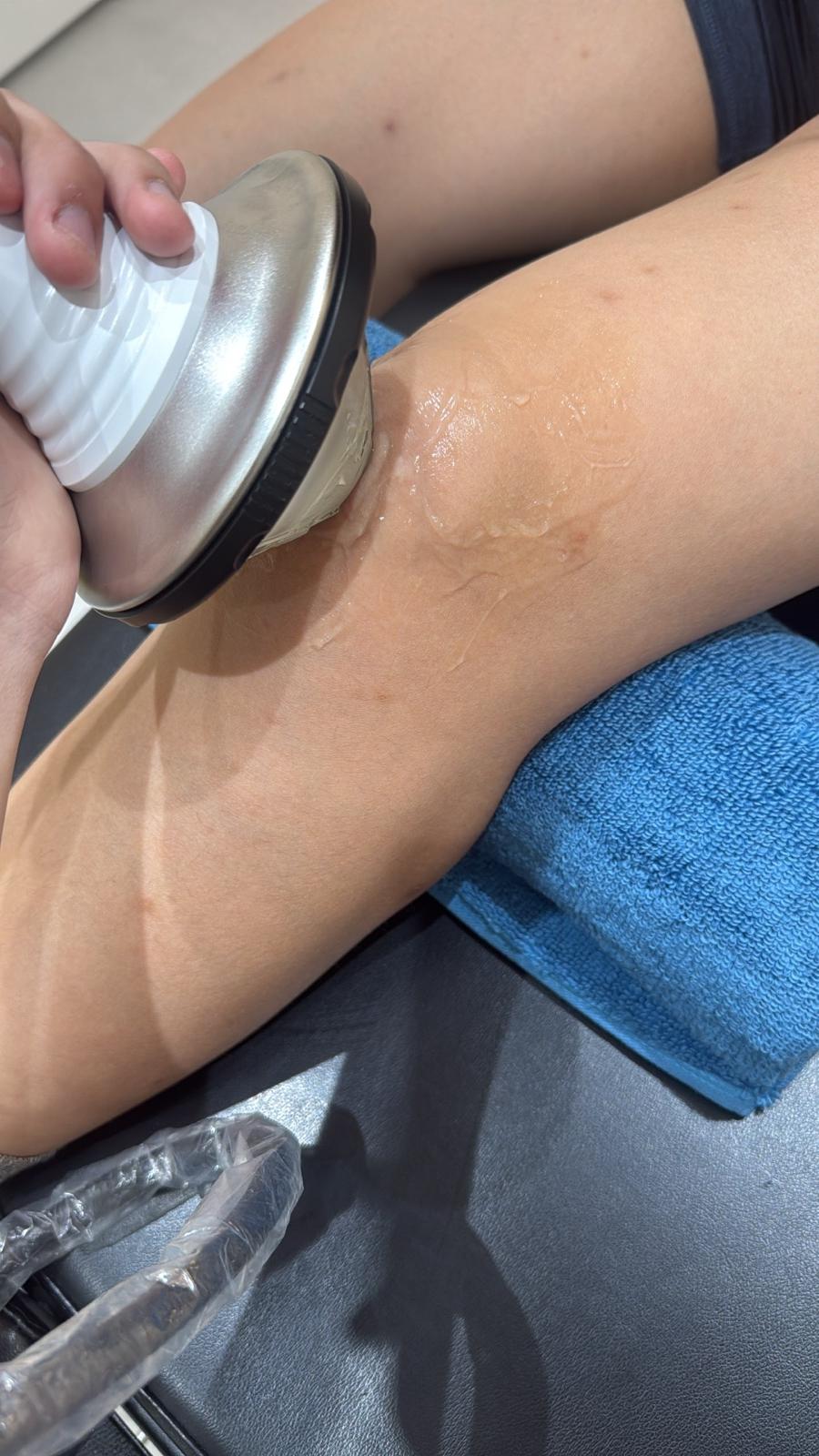
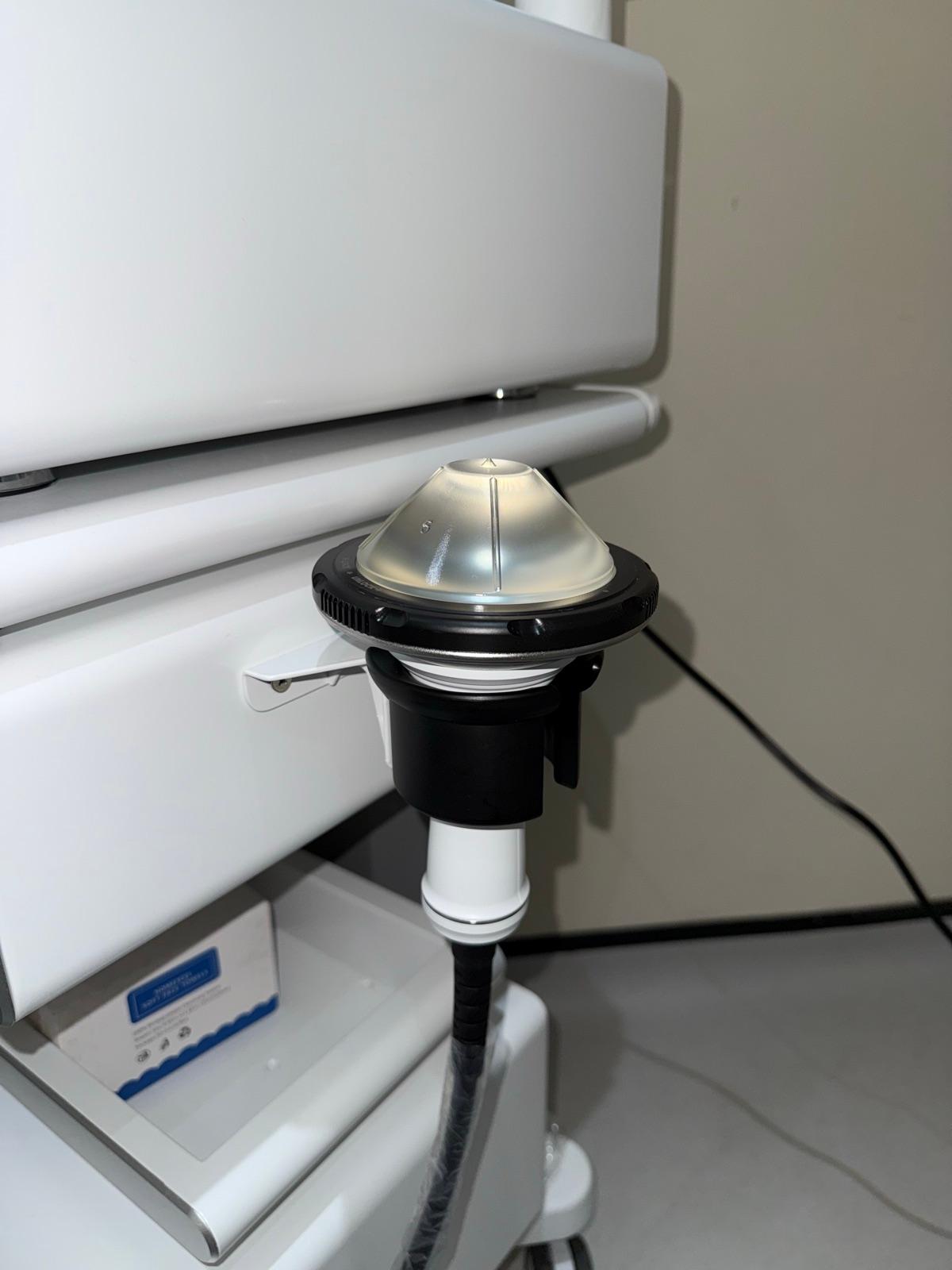
What is focused shockwave therapy?
Focused shockwave therapy (FSWT) delivers short, high-energy acoustic pulses to a precise depth in the tissue. It is used with the aim of stimulating the body's own repair processes in long-standing tendon and soft-tissue problems, and research suggests it may help reduce pain and improve function in several chronic conditions. At UK Pain Clinic we use a piezoelectric focused shockwave unit: interchangeable heads let the clinician set the focal depth from about 5 mm to 40 mm, so the energy reaches the tendon or bone surface being treated rather than the skin.
Focused shockwave is different from the more common "radial" shockwave, which spreads energy from the skin surface outwards. Both are used in clinics; focused devices concentrate the energy at a chosen depth.
What it may help with
- Plantar fasciitis and heel pain
- Tennis elbow and golfer's elbow
- Achilles and patellar (knee) tendinopathy
- Calcific shoulder tendinopathy
- Greater trochanteric (outer hip) pain
- Long-standing muscle trigger points
- Knee osteoarthritis, in selected cases (the evidence is more limited than for tendon problems)
Shockwave is usually considered when a problem has lasted several months and has not settled with exercise and other treatment. It is used as part of a plan that also includes loading exercises.
What happens in a session
- Assessment first – your clinician confirms the diagnosis and checks that shockwave is suitable for you.
- Locating the area – the tender structure is found by touch, and gel is applied to the skin.
- Treatment – the applicator is held over the area while pulses are delivered (around 2,000 for a single area). The intensity is adjusted to what you can comfortably tolerate.
- Afterwards – you can walk out and carry on with your day. Mild soreness or redness for a day or two is common.
A session usually takes about 15 minutes for one area.
How many sessions?
Most courses are around 3–6 sessions, about a week apart. Changes are often gradual over the following weeks, and your clinician will review progress as you go. Outcomes vary from person to person.
Who provides it
Shockwave is provided by our HCPC-registered physiotherapists and GCC-registered chiropractor as part of your treatment plan — see our team.
Cost
Shockwave can be added to an assessment or follow-up, and can also be booked on its own once you have had an initial assessment with us. Single-session and package prices (4 and 8 sessions) are on our fees page.
Safety and who it is not suitable for
Shockwave is generally well tolerated, but it is not used:
- during pregnancy
- over an area with a tumour, infection or open wound
- if you have a bleeding disorder or take blood-thinning medication (discussed case by case)
- directly over nerves, major blood vessels, a recent injection site, or growth plates in children
- with a pacemaker near the treatment area
Your clinician will screen for these before treatment.
Insurance
Not every policy covers shockwave. Please check with your insurer and check with us before you book.
Sources: NICE IPG311 – ESWT for plantar fasciitis · NICE IPG313 – ESWT for refractory tennis elbow
Frequently asked questions
- Does shockwave therapy hurt?
It is usually described as uncomfortable rather than painful. The intensity is adjusted to what you can tolerate, and most people walk out and carry on with their day.
- How quickly does shockwave work?
Changes are usually gradual over several weeks rather than immediate. Most courses are around 3–6 sessions about a week apart, and outcomes vary from person to person.
- Can I book shockwave without an assessment?
Your first visit needs to be an initial assessment so we can confirm the diagnosis and check shockwave is suitable. After that, shockwave sessions can be booked on their own.
- Is shockwave covered by insurance?
Some policies cover it and some do not. Please check with your insurer and check with us before you book.
- What is the difference between focused and radial shockwave?
Radial shockwave spreads energy outwards from the skin surface; focused shockwave concentrates energy at a chosen depth. Our clinic uses a piezoelectric focused unit with adjustable depth.
This page is general information, not a diagnosis. A clinician will assess you before recommending any treatment. Outcomes vary from person to person. Read our full disclaimer