
Core treatments
Therapeutic Ultrasound
High-frequency sound waves intended to support tissue healing, reduce inflammation and release soft-tissue adhesions.
What is therapeutic ultrasound?
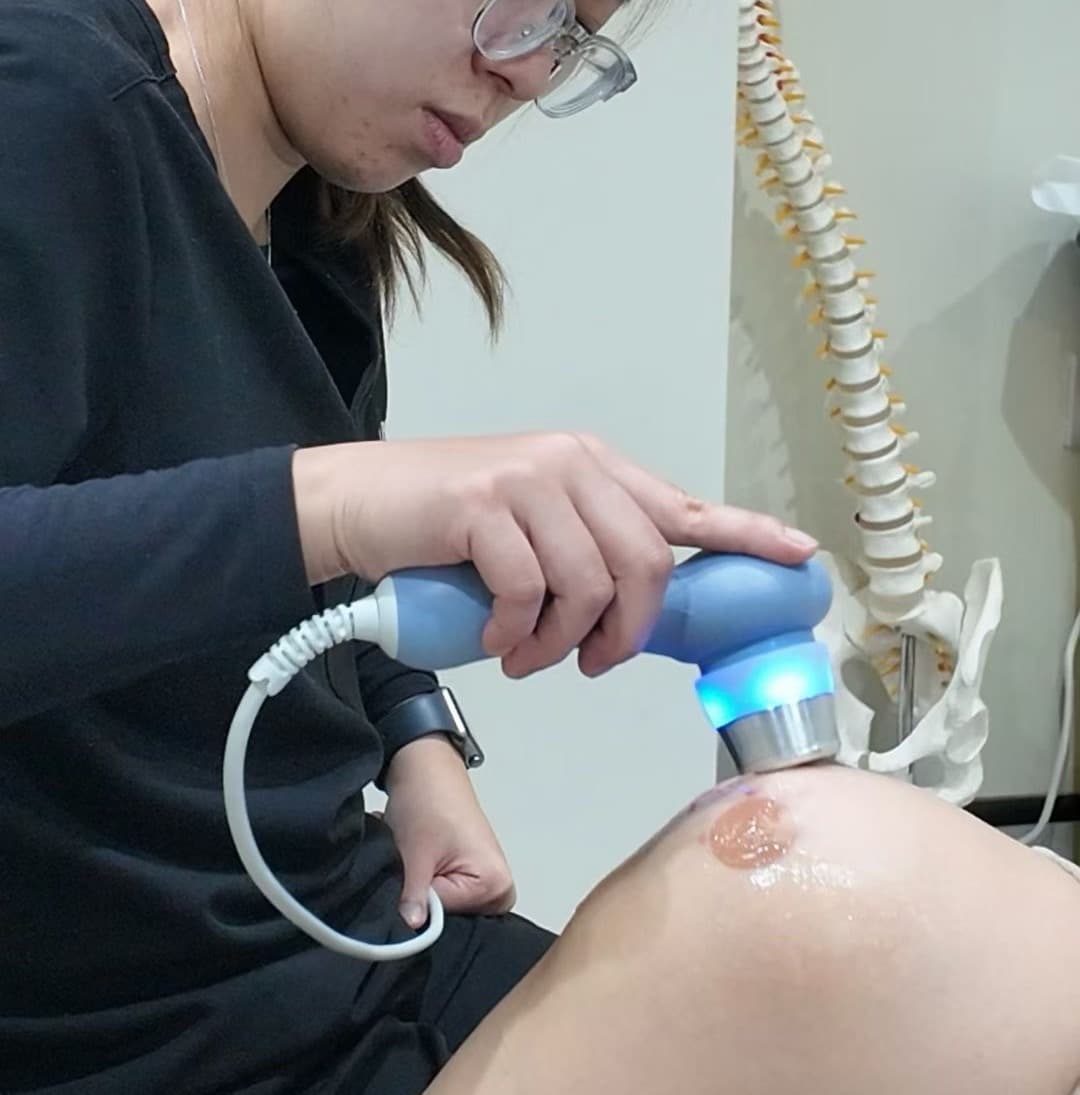
Therapeutic ultrasound uses high-frequency sound waves, well above the range of human hearing, delivered through a small treatment head that is moved over the skin. The sound waves pass through the skin into the deeper soft tissues. Depending on the settings, they can produce gentle heating (continuous mode) or mainly mechanical effects with little heat (pulsed mode). The aim is to support the healing of tendons, ligaments and other soft tissues, ease pain and help loosen tight or scarred tissue.
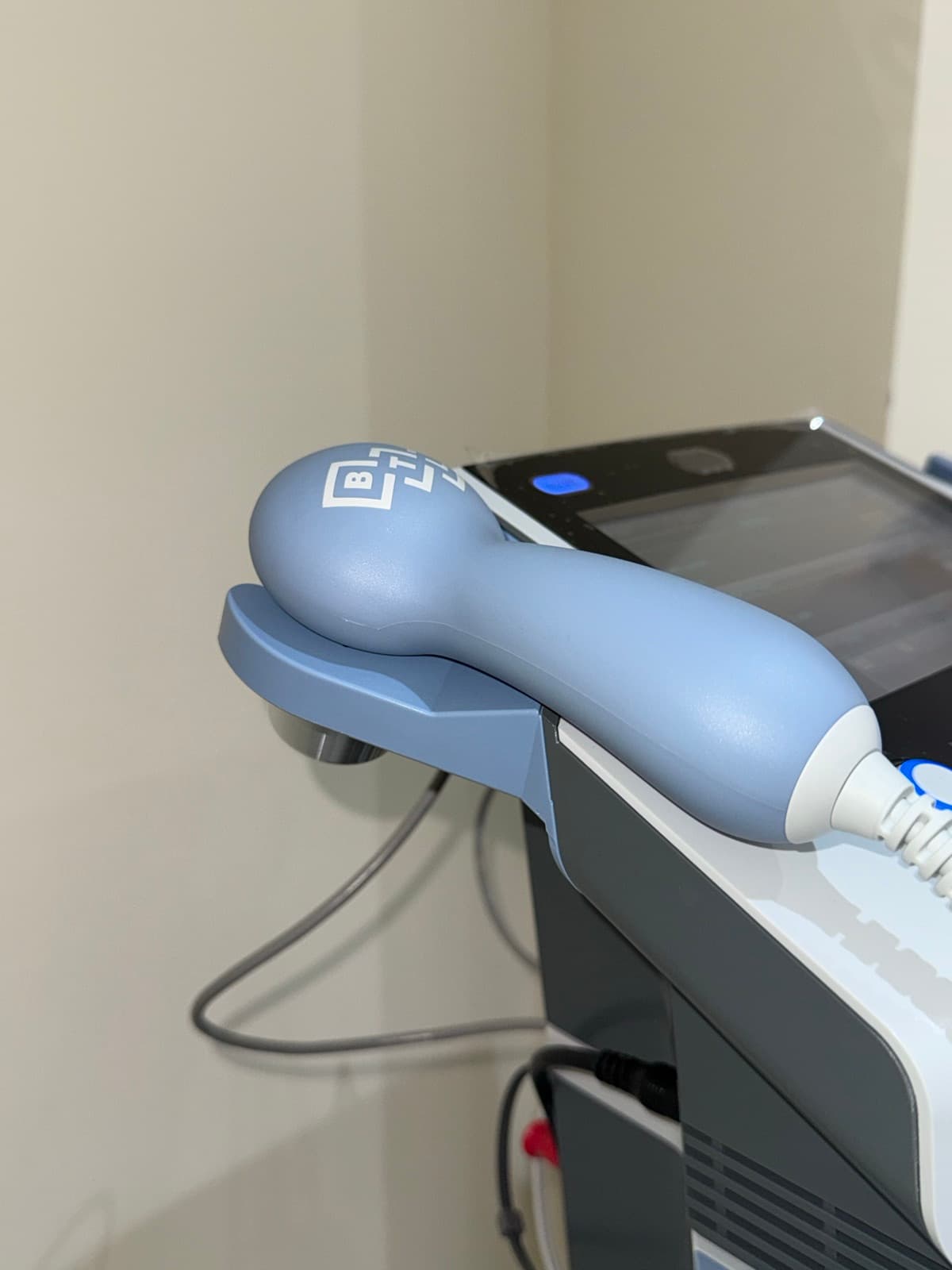
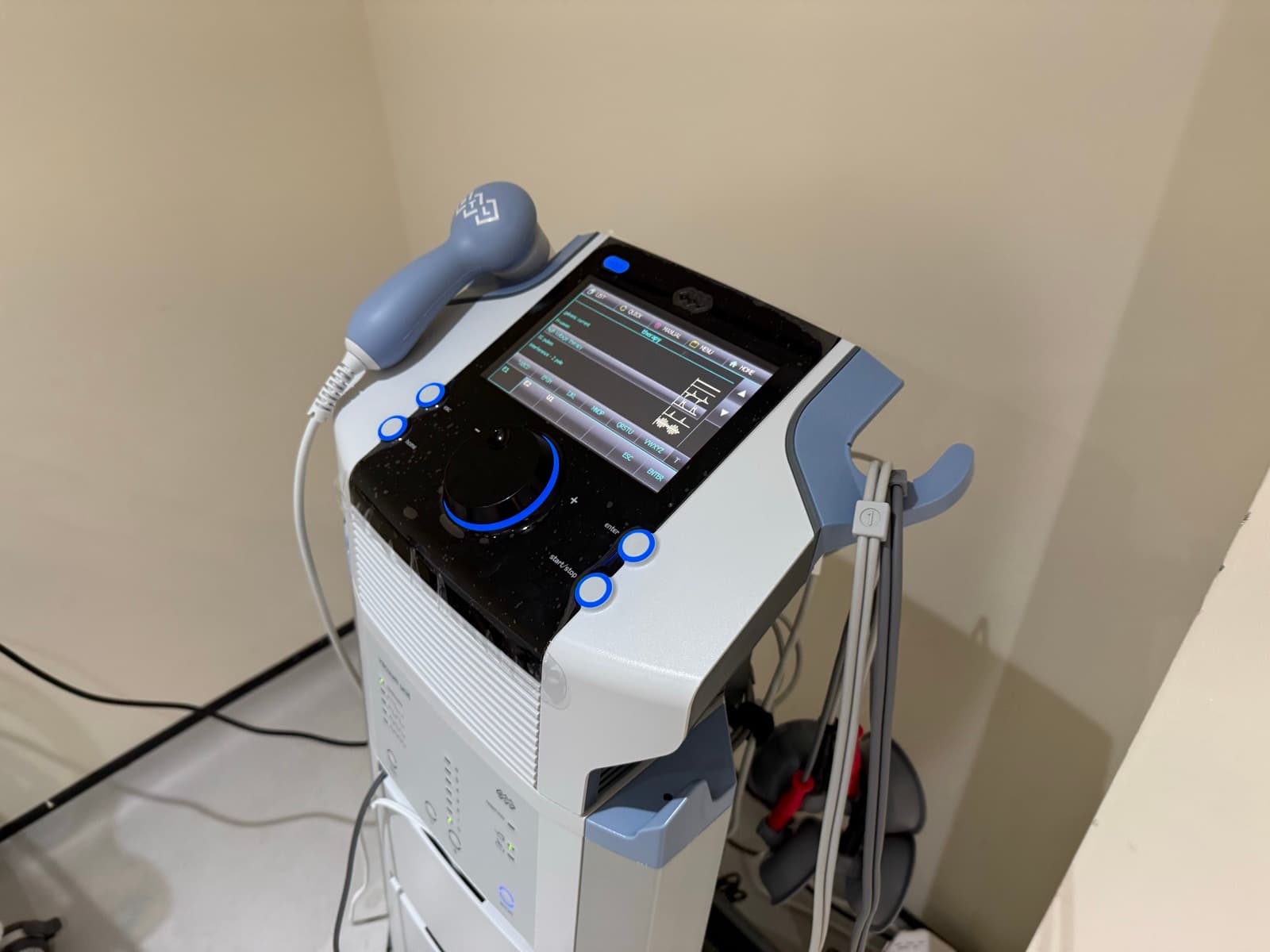
At UK Pain Clinic we use the ultrasound head of our BTL combined-therapy unit; the same unit also provides interferential therapy (IFT) and TENS.
Therapeutic ultrasound is not the same as an ultrasound scan. A scan uses sound waves to make a picture of the inside of the body; therapeutic ultrasound uses them as a treatment and produces no image. If you need imaging, see our guide to X-ray, MRI and ultrasound scans.
Research on therapeutic ultrasound is mixed: some studies suggest it may help some people with certain soft-tissue and joint problems, while others find little extra benefit. We therefore use it only as an add-on — a supporting tool within a plan built around exercise and manual therapy — when your clinician thinks it may help.
What it may help with
Ultrasound may be considered as part of a plan for:
- Ligament sprains, such as an ankle sprain or wrist sprain, once the first few days have passed
- Tendon problems, such as rotator cuff tendinopathy or tennis elbow
- Scar tissue and soft-tissue tightness after injury or surgery, once the wound has fully healed
- Local muscle tightness that limits how comfortably you can exercise
Tendons and ligaments respond mainly to the right amount of load over time, so ultrasound is always combined with a graded exercise programme rather than used in place of one. If ultrasound is unlikely to add anything for your problem, your clinician will tell you.
What happens in a session
- Assessment first – ultrasound is not offered at your first visit. Your clinician assesses you, and if ultrasound may help, adds it to your treatment plan.
- Preparing the area – a water-based gel is applied to the skin so the sound waves can pass from the treatment head into the tissue.
- Treatment – the clinician moves the head slowly and continuously over the area. Most people feel very little, or a mild warmth with continuous settings. Tell your clinician straight away if you feel heat, aching or discomfort, and the settings will be changed.
- Afterwards – the gel is wiped off and you can carry on with your day, usually going straight on to exercise or manual therapy.
The ultrasound itself usually takes a few minutes per area, within an appointment of about 15 minutes.
How many sessions?
There is no fixed course. Ultrasound is usually used for a limited number of sessions in the earlier part of a plan, and then stopped as your exercise programme takes over. Your clinician will review whether it is helping as you go. Outcomes vary from person to person.
Who provides it
Therapeutic ultrasound is provided by our HCPC-registered physiotherapists and GCC-registered chiropractor as part of your treatment plan — see our team.
Cost
Ultrasound is added to your plan after your initial assessment and can then also be booked on its own. It is offered at a reduced rate when combined with focused shockwave in the same visit. Current prices are on our fees page.
Safety and who it is not suitable for
Therapeutic ultrasound is generally well tolerated, but it is not used:
- during pregnancy over the abdomen, pelvis or lower back
- over an area with active cancer
- if you have, or may have, a deep vein thrombosis (DVT) or other blood clot in the area
- over an infection, open wound or broken skin
- over areas of reduced sensation, where you could not tell us if it felt too warm
- over the eyes or the front of the neck
- over the growth plates of children and teenagers whose bones are still growing
- over or near a pacemaker or other implanted electrical device
- over metal implants close to the surface (heating settings are avoided)
Your clinician will screen for these before treatment.
Insurance
Not every policy covers therapeutic ultrasound. Please check with your insurer and check with us before you book.
Sources: Ultrasound therapy for musculoskeletal pain – systematic review and meta-analysis (PMC)
Frequently asked questions
- Does therapeutic ultrasound hurt?
No. Most people feel very little, or a mild warmth with continuous settings. If you feel heat, aching or discomfort, tell your clinician and the settings will be changed straight away.
- Is therapeutic ultrasound the same as an ultrasound scan?
No. A scan uses sound waves to make a picture of the inside of the body. Therapeutic ultrasound uses sound waves as a treatment and produces no image. See our guide to scans.
- Does therapeutic ultrasound work?
Research is mixed, but it may help some people with certain soft-tissue and joint problems as part of a wider plan. We use it alongside exercise when your clinician thinks it may help, and outcomes vary.
- Can I have ultrasound at my first appointment?
No. Ultrasound is not offered at the first visit. Your clinician first carries out an initial assessment, and then adds ultrasound to your plan if it may help.
- Is therapeutic ultrasound covered by insurance?
Some policies cover it and some do not. Please check with your insurer and check with us before you book.
This page is general information, not a diagnosis. A clinician will assess you before recommending any treatment. Outcomes vary from person to person. Read our full disclaimer