
Core treatments
Interferential Therapy (IFT)
Medium-frequency electrotherapy for pain relief, swelling reduction and muscle relaxation.
What is interferential therapy?
Interferential therapy (IFT) is a form of electrotherapy. Two medium-frequency electrical currents are passed through the skin so that they cross in the area being treated; where they meet, they "interfere" to produce a low-frequency stimulation deeper in the tissue. Because medium-frequency current passes through the skin more comfortably than low-frequency current, IFT is usually felt as a gentle tingling or buzzing rather than a sharp sensation.
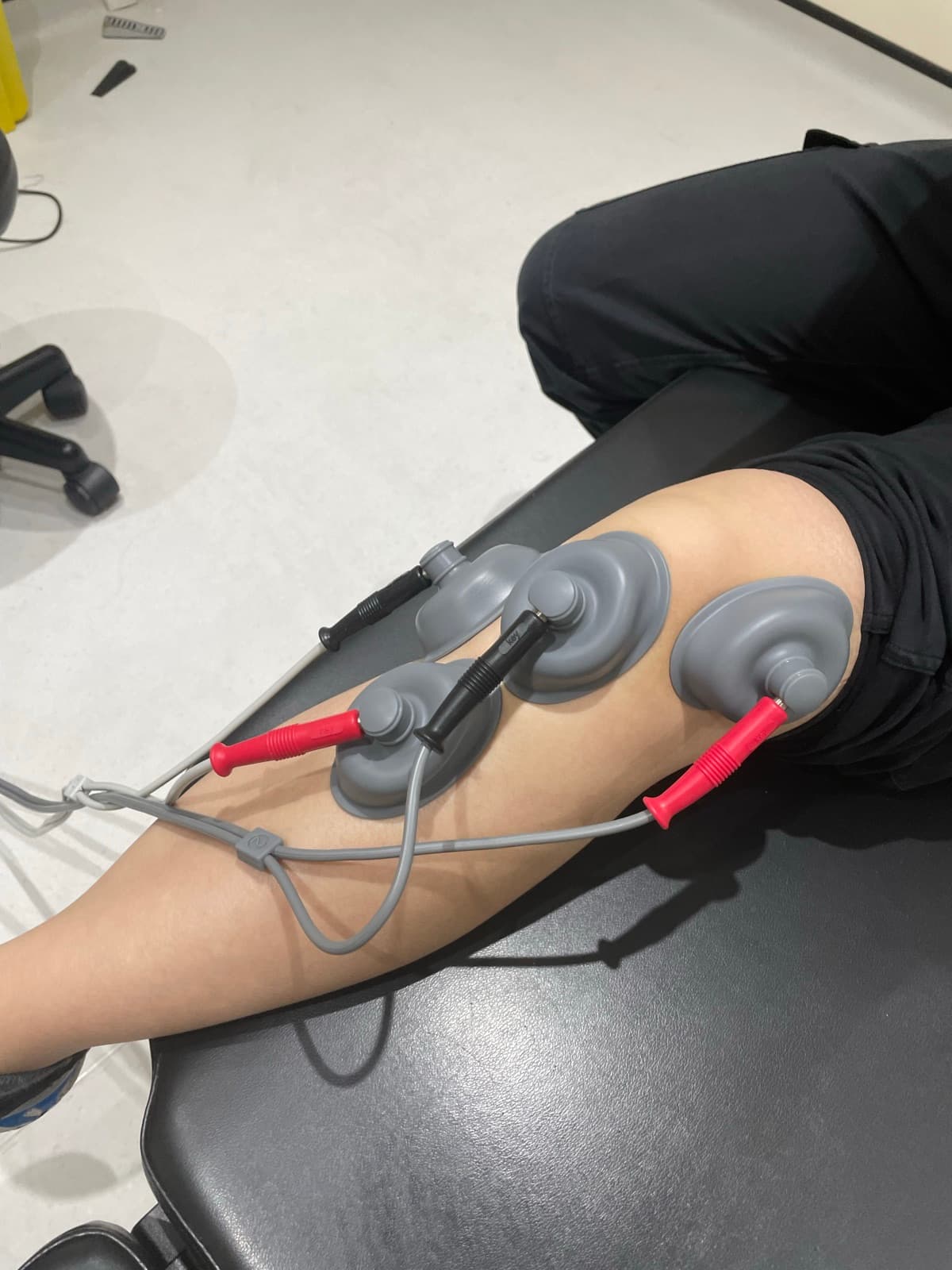
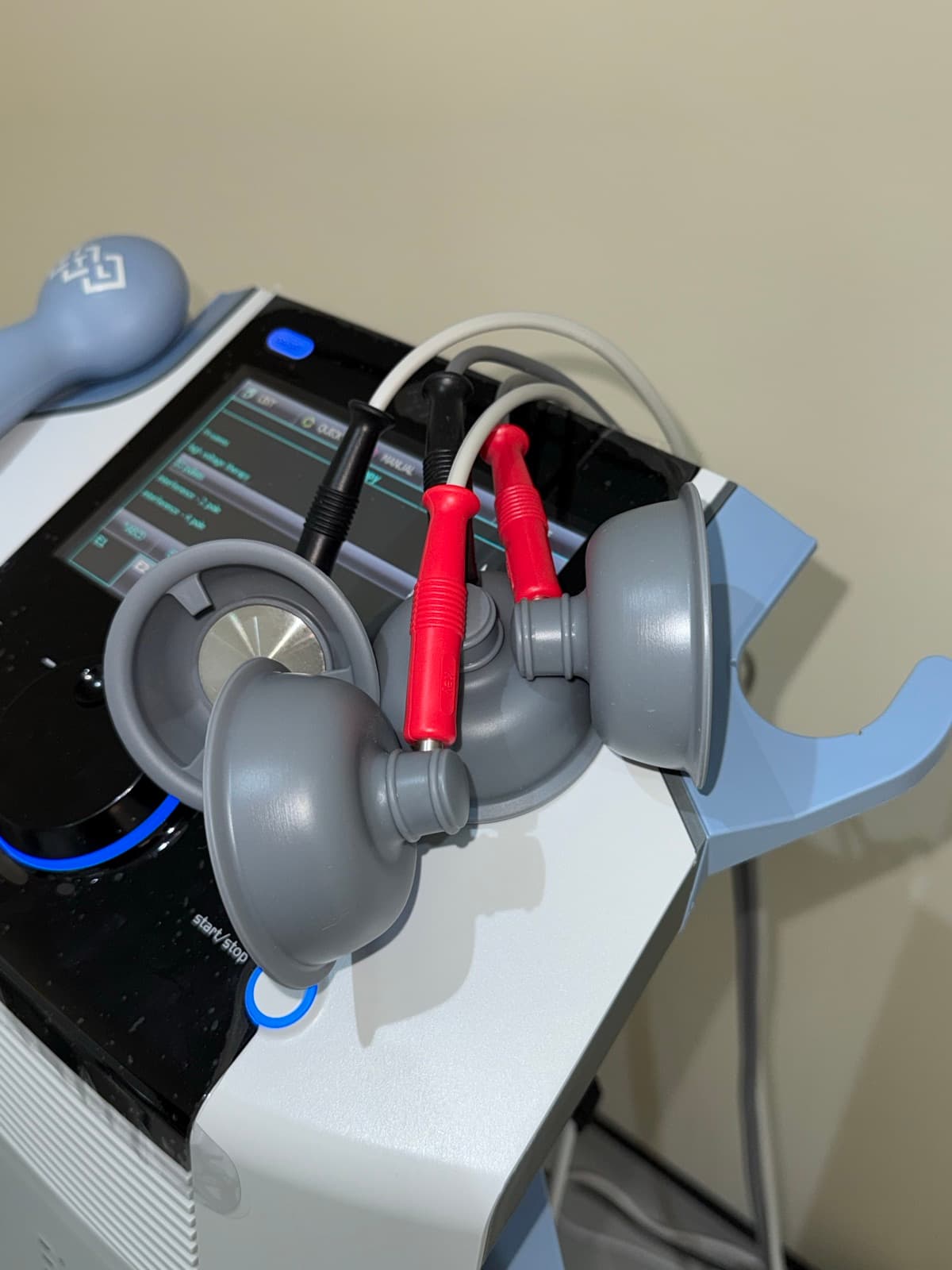
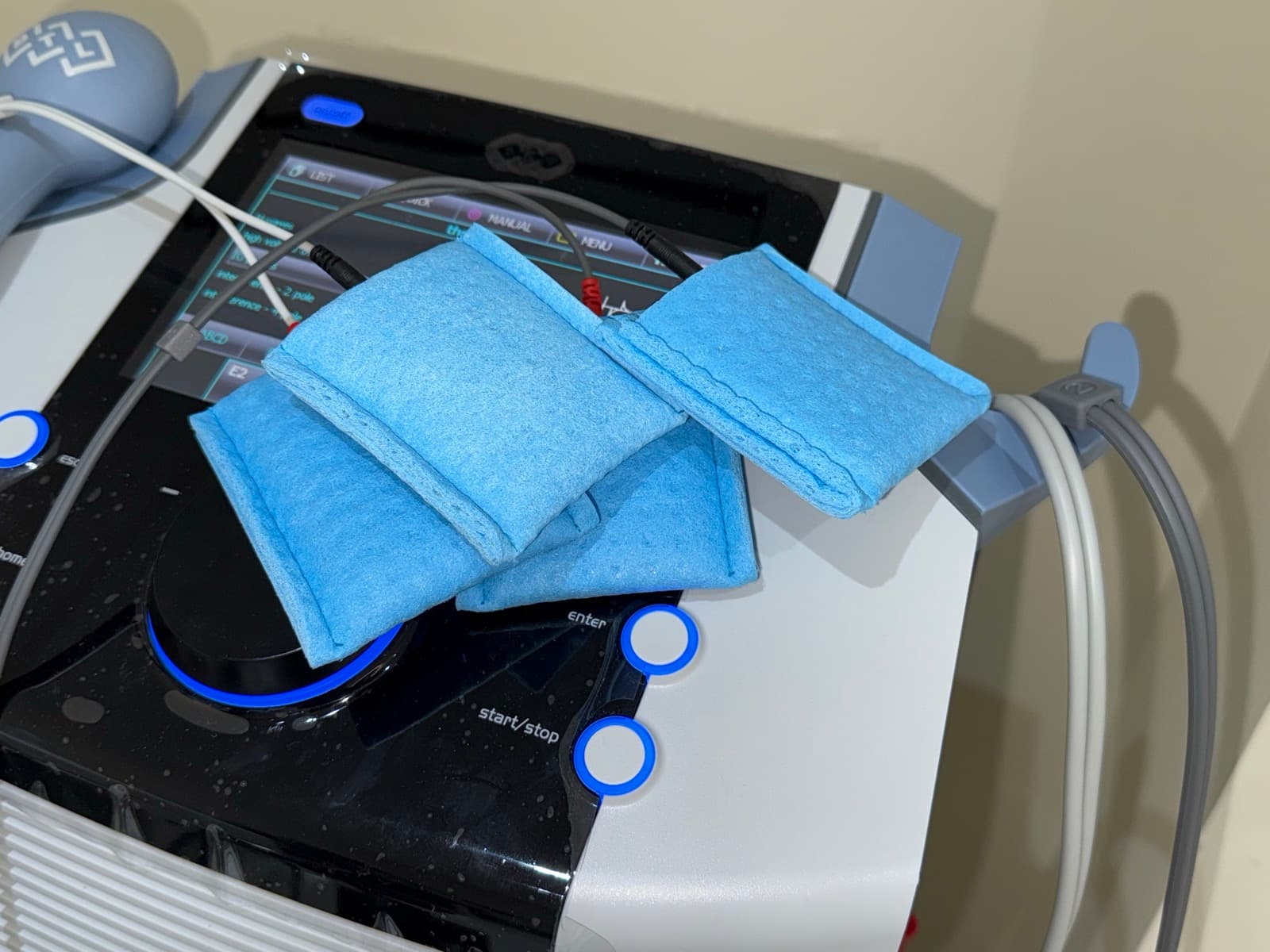
At UK Pain Clinic we deliver IFT from a BTL combined-therapy unit with vacuum electrodes: soft suction cups hold the electrodes in place without straps, and the same unit also provides TENS and therapeutic ultrasound. IFT is thought to work mainly by modulating pain signals in the nerves and encouraging the body's own pain-relieving chemicals, and it may also help local circulation and muscle relaxation.
Research on IFT is mixed: some studies suggest it may help ease pain in the short term for some people, particularly alongside exercise. We therefore use IFT as an add-on — a supporting tool within a wider plan — when your clinician thinks it may help, never as the main treatment.
What it may help with
IFT may be considered to help ease pain or muscle guarding so that you can move and exercise more comfortably, for example:
- After a recent soft-tissue injury such as an ankle sprain or knee ligament sprain
- Muscle strains, such as a calf strain or hamstring strain
- Painful muscle spasm, such as acute wry neck
- Swelling after injury, alongside elevation, movement and compression
The aim is short-term symptom relief that supports the active parts of your plan — exercise, manual therapy and advice — rather than replacing them. If IFT is unlikely to add anything for your problem, your clinician will tell you.
What happens in a session
- Assessment first – your clinician confirms what is going on and checks that IFT is suitable for you (see the safety list below).
- Placing the electrodes – two or four suction cups are placed around the painful area. You may feel a gentle pull on the skin from the suction.
- Treatment – the current is turned up slowly until you feel a strong but comfortable tingling. It should never be painful; tell your clinician if it feels too strong or uneven, and they will adjust it.
- Afterwards – the area may feel relaxed or slightly warm. Faint round marks from the cups usually fade within an hour or so.
An IFT session usually takes about 15 minutes, and it is often given before or after manual therapy or exercise in the same visit.
How many sessions?
There is no fixed course. IFT is usually used for a small number of sessions while pain is settling, and then phased out as your exercise programme progresses. Your clinician will review whether it is helping as you go. Outcomes vary from person to person.
Who provides it
IFT is provided by our HCPC-registered physiotherapists and GCC-registered chiropractor as part of your treatment plan — see our team.
Cost
IFT may be added at your first visit when appropriate, and can be booked on its own once you have had an initial assessment with us. Some of our treatment packages include IFT sessions, and IFT is offered at a reduced rate when combined with focused shockwave in the same visit. Current prices are on our fees page.
Safety and who it is not suitable for
IFT is generally well tolerated, but it is not used:
- if you have a pacemaker or another implanted electrical device
- during pregnancy over the abdomen, pelvis or lower back
- over an area with active cancer
- if you have, or may have, a deep vein thrombosis (DVT) or other blood clot in the area
- over an infection, open wound or broken skin
- over areas of reduced sensation, where you could not tell us if the current felt too strong
- over the eyes or the front of the neck
Your clinician will screen for these before treatment. Please tell us about any heart condition, epilepsy or recent surgery as well.
Insurance
Not every policy covers IFT. Please check with your insurer and check with us before you book.
Sources: Interferential current for chronic low back pain – systematic review (Braz J Phys Ther) · Interferential current for knee osteoarthritis – meta-analysis (PMC)
Frequently asked questions
- What does interferential therapy feel like?
Most people feel a gentle tingling or buzzing under the suction cups, and the area may feel relaxed or slightly warm afterwards. The intensity is set to strong but comfortable, and it should never be painful.
- Does IFT work?
Research is mixed, but it may help ease pain in the short term for some people, particularly alongside exercise. We use it as an add-on within a wider plan when your clinician thinks it may help, and outcomes vary.
- Can I have IFT at my first appointment?
Yes, if your clinician thinks it is appropriate after the initial assessment. Once you have been assessed, IFT can also be booked on its own.
- Is IFT safe if I have a pacemaker or am pregnant?
IFT is not used if you have a pacemaker or another implanted electrical device, and it is not used over the abdomen, pelvis or lower back during pregnancy. Your clinician screens for these and other precautions before treatment.
- Is IFT covered by insurance?
Some policies cover it and some do not. Please check with your insurer and check with us before you book.
This page is general information, not a diagnosis. A clinician will assess you before recommending any treatment. Outcomes vary from person to person. Read our full disclaimer