
Additional services
X-ray & MRI Referral
Fast-track X-ray, MRI and MRI with contrast through our partner imaging centre — often same- or next-day, subject to availability — with results reviewed by your clinician.
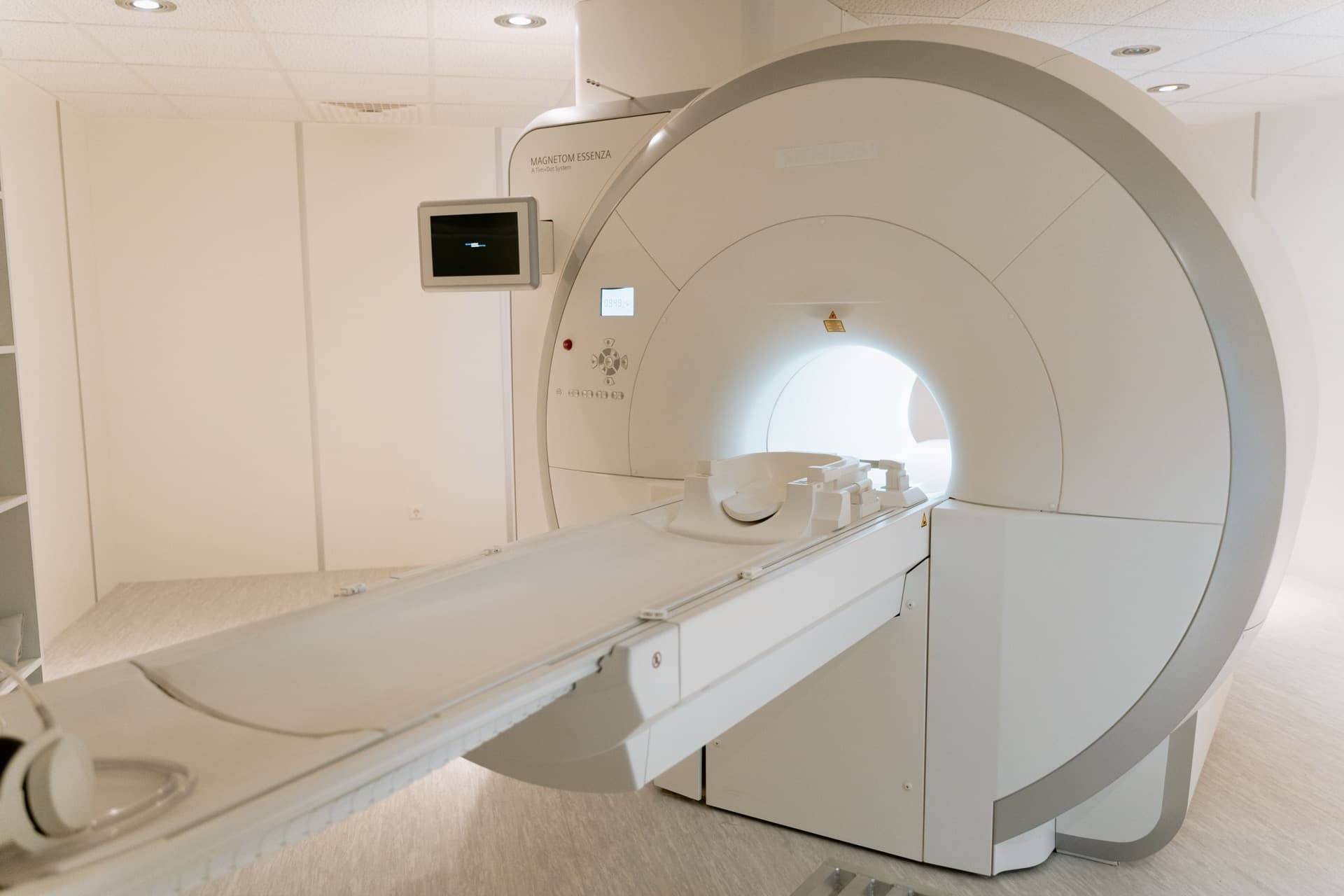
What is an imaging referral?
After an assessment, our clinicians can refer you privately for an X-ray, an MRI scan or an MRI with contrast at a partner imaging centre in London. The scan is reported by a radiologist, and your clinician then goes through the report with you and explains what it means for your treatment plan.
A referral is part of your care with us rather than a stand-alone scan service: we only arrange imaging when the result is likely to change what we do.
When imaging helps — and when it does not
Most musculoskeletal pain, including most back and neck pain, is diagnosed by history and examination and does not need a scan at first. Scans often show "wear and tear" changes that are common in people with no pain at all, so imaging without a clear question can cause worry without changing treatment.
Imaging may be useful when:
- a fracture is suspected after an injury
- nerve symptoms (pain, numbness or weakness in an arm or leg) persist or are getting worse — for example with sciatica or a disc herniation
- a joint locks or gives way, as can happen with a meniscus tear or a significant ligament injury
- pain is not behaving as expected or has not improved with a reasonable period of treatment
- the result would help decide whether a joint injection or a specialist opinion is appropriate
X-ray or MRI?
- X-ray – shows bones and joints: suspected fractures, arthritis, joint spacing and alignment. It is quick and uses a low dose of radiation.
- MRI – uses a strong magnet rather than radiation and shows soft tissue in detail: discs, nerves, ligaments, cartilage, tendons and muscle.
- MRI with contrast – a contrast dye is given during the MRI when a clinician needs more detail, for example after surgery or when infection or other specific causes need to be ruled out.
For a fuller comparison, including when ultrasound is used, see our guide X-ray vs MRI vs ultrasound.
How the referral works
- Assessment – your clinician examines you and decides whether imaging would change your management, and if so which scan and which area.
- Referral – we send the referral to our partner imaging centre and you are contacted to arrange the appointment. Same- or next-day appointments are often available, subject to availability.
- Safety screening – the imaging centre checks that the scan is safe for you before it goes ahead (see below).
- The scan – an X-ray takes a few minutes; an MRI usually takes around 20–40 minutes per area.
- Results – the radiologist's report is sent to your clinician, and we go through it with you at your follow-up and adjust the plan. Where a medical opinion or prescription is needed, we can also arrange an online GP consultation.
Who can refer you
Imaging is arranged by our HCPC-registered physiotherapists and GCC-registered chiropractor after an assessment — see our team. Mr Tim Tsui also arranges imaging as a First Contact Physiotherapist in the NHS and offers second opinions on existing scans.
Cost
The scan is paid separately from your appointment with us. Current prices for an X-ray (one area), an MRI (one area) and the contrast add-on are on our fees page.
Safety and who it may not be suitable for
- X-ray – please tell us if you are or might be pregnant.
- MRI – the magnet can affect some implants. Tell us if you have a pacemaker or other implanted device, metal fragments (for example in the eye), aneurysm clips, a cochlear implant, or if you are pregnant. MRI scanners are enclosed, so let us know if you are claustrophobic.
- MRI with contrast – your kidney function, allergies and any previous reaction to contrast are checked first.
Urgent symptoms
If you have had an injury and suspect a fracture, or have a sudden flare-up that needs assessing today, call us first — we will see you the same day where we can and arrange imaging if needed. For more severe symptoms, such as a suspected broken bone with obvious deformity, a deep wound, a head injury or severe pain that cannot wait, go straight to A&E. Chest pain, loss of bladder or bowel control, a sudden severe headache or rapidly worsening weakness are emergencies: call 999.
Insurance
Many policies cover diagnostic imaging, but your insurer decides on cover and usually needs to pre-authorise the scan. Please check with your insurer and check with us before you book.
A scan is one part of an assessment, not a diagnosis on its own; outcomes vary and your clinician will explain how the result fits your symptoms.
Sources: NHS – X-ray · NHS – MRI scan
Frequently asked questions
- Do I need a scan for my back or joint pain?
Usually not at first. Most musculoskeletal pain is diagnosed by examination, and a scan is only arranged when the result would change your treatment — for example a suspected fracture or persistent nerve symptoms.
- How quickly can I have an X-ray or MRI?
After your assessment, same- or next-day appointments are often available at our partner imaging centre, subject to availability. Your clinician then goes through the report with you.
- Can I book a scan without an assessment?
No. Imaging is arranged by one of our clinicians after an initial assessment, so that the right scan of the right area is requested and the result can be interpreted in context.
- What is the difference between X-ray and MRI?
X-ray shows bones and joints and uses a low dose of radiation; MRI uses a magnet and shows soft tissues such as discs, nerves, ligaments and cartilage. See our guide X-ray vs MRI vs ultrasound.
- Is imaging covered by insurance?
Many policies cover diagnostic imaging, but your insurer decides and usually needs to pre-authorise it. Please check with your insurer and check with us before you book.
This page is general information, not a diagnosis. A clinician will assess you before recommending any treatment. Outcomes vary from person to person. Read our full disclaimer