
Core treatments
Dry Needling & Acupuncture
Fine needles placed into tight muscle trigger points to help release tension and ease chronic pain.
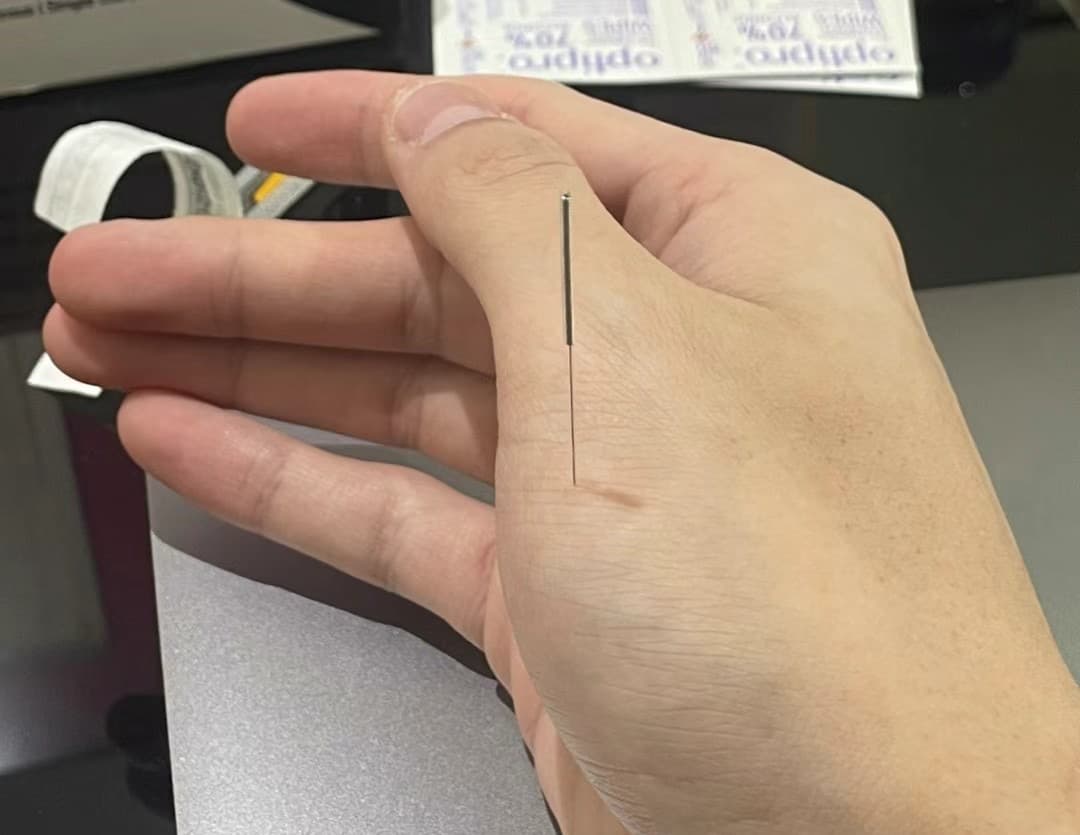
What are dry needling and acupuncture?
Dry needling and acupuncture both use very fine, sterile, single-use needles placed through the skin into muscle or the tissue around it. At UK Pain Clinic both are used as part of physiotherapy or chiropractic care, in their Western medical form: point selection is based on anatomy, your examination findings and current evidence-informed practice, not on traditional systems.
- Dry needling targets a tight, tender band in a muscle (a trigger point). "Dry" simply means nothing is injected. The aim is to reduce muscle tension and local pain sensitivity.
- Western medical acupuncture places needles at recognised points and in tender areas, with the aim of influencing how the nervous system processes pain. Needles are often left in place for a few minutes.
To a patient the two can look very similar. For a fuller comparison, read our guide dry needling vs acupuncture.
What it may help with
- Muscle trigger points and tight, tender muscles
- Neck pain and upper-back and shoulder tension, including trapezius and rhomboid strain
- Low back pain, as part of a plan with exercise and hands-on treatment
- Tension-type headache
- Chronic pain where muscle sensitivity is part of the picture
- Buttock and hip muscle pain such as piriformis syndrome
- Forearm muscle tension alongside rehabilitation for tennis elbow
Research suggests needling may help reduce pain in the short term for some people, and NICE guidance says a single course of acupuncture or dry needling may be considered for chronic primary pain, and a course of acupuncture for preventing chronic tension-type headache. US physician guidance (American College of Physicians) also lists acupuncture among the first options for low back pain. Needling is never used on its own: it is combined with exercise, advice and hands-on treatment.
Dry needling for back pain
Low back pain is one of the most common reasons people ask about dry needling in London. Tight, tender muscles in the lower back and buttock, such as the muscles alongside the spine, quadratus lumborum and the gluteal muscles, can contribute to back pain and stiffness. Needling trigger points in these muscles may help reduce pain and muscle tension in the short term for some people, which can make it easier to move and exercise. Guidelines for low back pain put exercise and staying active first, so at our clinic needling is only ever one part of a wider plan with exercise, advice and hands-on treatment. If your back pain comes with leg pain, numbness or weakness, your clinician will check the nerves first. Outcomes vary. See lower back pain and myofascial pain.
Dry needling for neck pain
Neck and upper-shoulder pain from desk work, phone use or stress often involves tender trigger points in the upper trapezius, levator scapulae and the small muscles at the base of the skull. Dry needling these muscles may help ease pain and stiffness for some people in the short term. We combine it with posture and movement advice, exercises to build neck and shoulder endurance, and hands-on treatment, and we check for nerve or other symptoms that need a different approach. Outcomes vary. See neck pain.
Dry needling and headaches
Some headaches are linked to the neck and shoulders. Trigger points in the neck, shoulder and jaw muscles can refer pain into the head and may contribute to tension-type headache or cervicogenic (neck-related) headache. Dry needling targets those muscle trigger points, alongside neck exercises and treatment of the neck joints, and may help some people have these headaches less often or less strongly.
Dry needling is not a treatment for migraine itself: migraine is a neurological condition, usually managed with your GP. Some people with migraine find it helps, particularly with the neck and shoulder muscle tension that can come with headaches; outcomes vary. A sudden, severe headache, or a headache with weakness, confusion, problems with speech or vision, or fever with a stiff neck, needs urgent medical care: call 999 or go straight to A&E.
What happens in a session
- Assessment first – your clinician examines you, explains why needling may help and checks it is safe for you. You can always say no.
- Preparation – the skin is cleaned and you are positioned comfortably, usually lying down.
- Needling – fine needles are placed in the chosen muscles. With dry needling you may feel a brief twitch or deep ache in the muscle; with acupuncture the needles are usually left in for a few minutes.
- Afterwards – the needles are removed and disposed of straight away. Your clinician usually follows with stretches, movement or exercise.
Needling usually takes around 15 minutes of your appointment.
How many sessions?
This depends on your problem and how you respond. Needling is often used over a few visits within a wider treatment plan, and your clinician will review whether it is helping before continuing. Outcomes vary from person to person.
Who provides it
All three of our clinicians offer acupuncture and dry needling. Tim Tsui and Julius Cheuk Chung are HCPC-registered physiotherapists and members of the Acupuncture Association of Chartered Physiotherapists (MAACP). Dr Lok Sze Candice Wong (Chiropractor) is GCC-registered and has postgraduate training in medical acupuncture and dry needling. See our team.
Cost
Acupuncture and dry needling are add-on treatments: they are added to an initial assessment or follow-up visit and cannot be booked on their own. The add-on price is on our fees page.
Safety and who it may not suit
Needling is generally well tolerated when carried out by a trained clinician using single-use sterile needles. Common, mild effects include soreness for a day or two, a small bruise or spot of bleeding, and feeling tired or light-headed. Fainting is uncommon, which is one reason you are treated lying down, especially the first time.
Please tell your clinician if any of the following apply, as needling may be adapted or avoided:
- a strong fear of needles
- a bleeding disorder, or you take blood-thinning (anticoagulant) medication
- pregnancy – some points and areas are avoided, and this is discussed with you first
- a weakened immune system, or poorly controlled diabetes
- infection, broken skin or swelling at the treatment area
- a pacemaker or other implanted device, if needles connected to a mild electrical current (electro-acupuncture) are considered
- metal allergy, or a history of fainting with needles or blood tests
Your clinician will screen for these before treatment.
Insurance
Some policies cover acupuncture or dry needling as part of physiotherapy and some do not. Please check with your insurer and check with us before you book.
Sources: NICE NG193 – chronic pain · NICE CG150 – headaches · ACP low back pain guideline (AAFP summary)
Frequently asked questions
- Does dry needling hurt?
The needles are very fine, so most people feel little as they go in. With dry needling you may feel a brief twitch or deep ache in the muscle, and soreness for a day or two afterwards is common.
- Dry needling vs acupuncture: what is the difference?
Dry needling targets tight trigger points in muscle; Western medical acupuncture uses recognised points with the aim of influencing how the nervous system processes pain. Both are used here within physiotherapy or chiropractic care. See dry needling vs acupuncture.
- Is this traditional acupuncture?
No. Our clinicians use Western medical acupuncture and dry needling, based on anatomy, your examination and evidence-informed practice, as one part of a wider treatment plan.
- Can I book acupuncture or dry needling on its own?
No. It is an add-on treatment that is added to an initial assessment or follow-up visit after your clinician has checked it is suitable. See our fees.
- Can dry needling help back pain or neck pain?
It may help some people in the short term, as part of a plan that includes exercise, advice and hands-on treatment. It is not a stand-alone treatment, and outcomes vary. Your clinician assesses you first and explains whether it suits your problem. See lower back pain and neck pain.
- Does dry needling help headaches or migraines?
For headaches linked to tight neck and shoulder muscles, such as tension-type or cervicogenic headache, dry needling may help some people as part of a wider plan. It is not a treatment for migraine itself, but some people with migraine find it helps, particularly with the neck and shoulder muscle tension that can come with headaches; outcomes vary. Please speak to your GP about managing migraine. A sudden, severe headache needs urgent care: call 999 or go straight to A&E.
- Is dry needling covered by insurance?
Some policies cover it as part of physiotherapy and some do not. Please check with your insurer and check with us before you book.
This page is general information, not a diagnosis. A clinician will assess you before recommending any treatment. Outcomes vary from person to person. Read our full disclaimer