
Core treatments
3D Posture Scan
A 3D posture scan of your spine, shoulders, pelvis and knees with a personalised report.
What is a 3D posture scan?
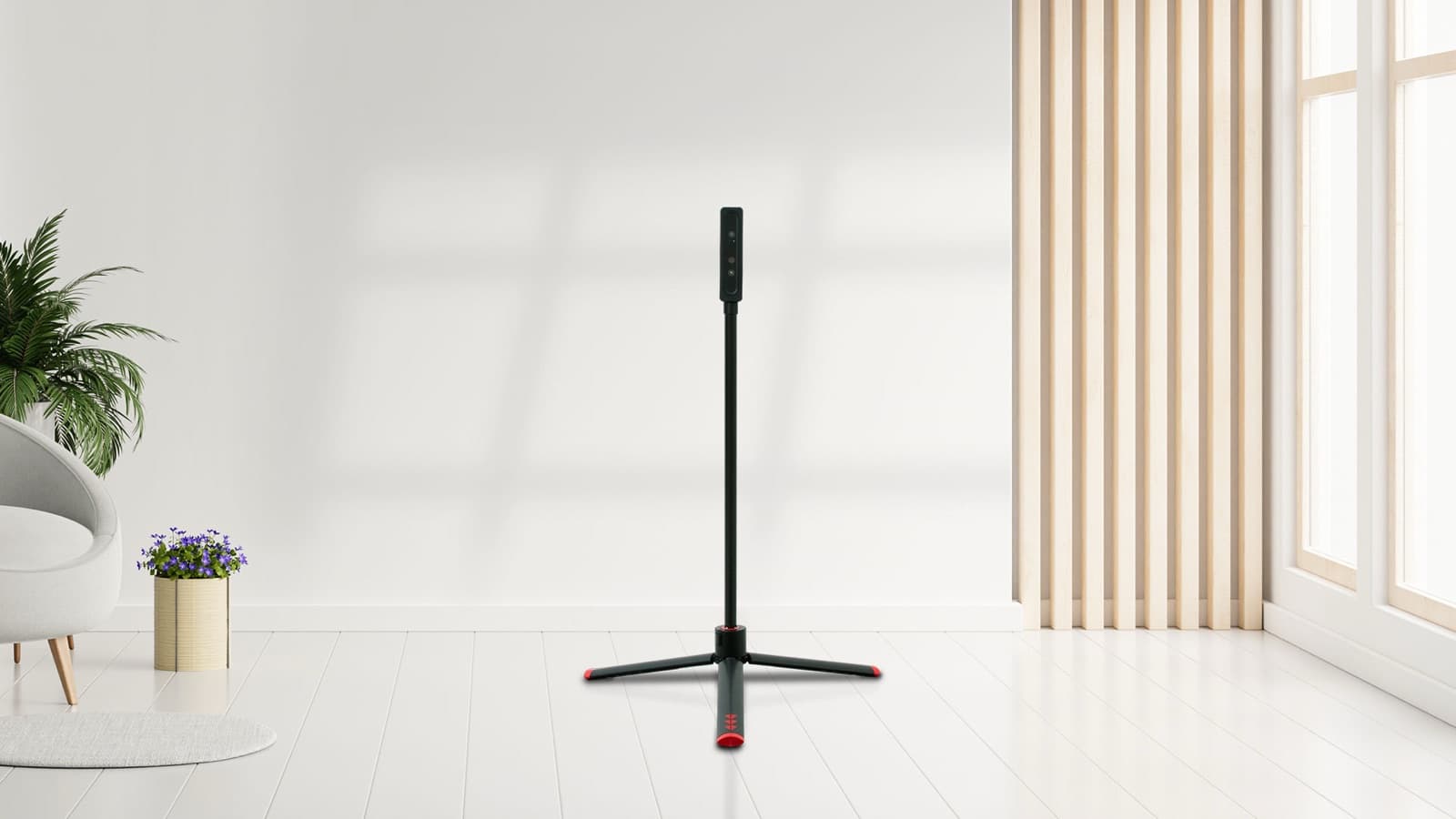
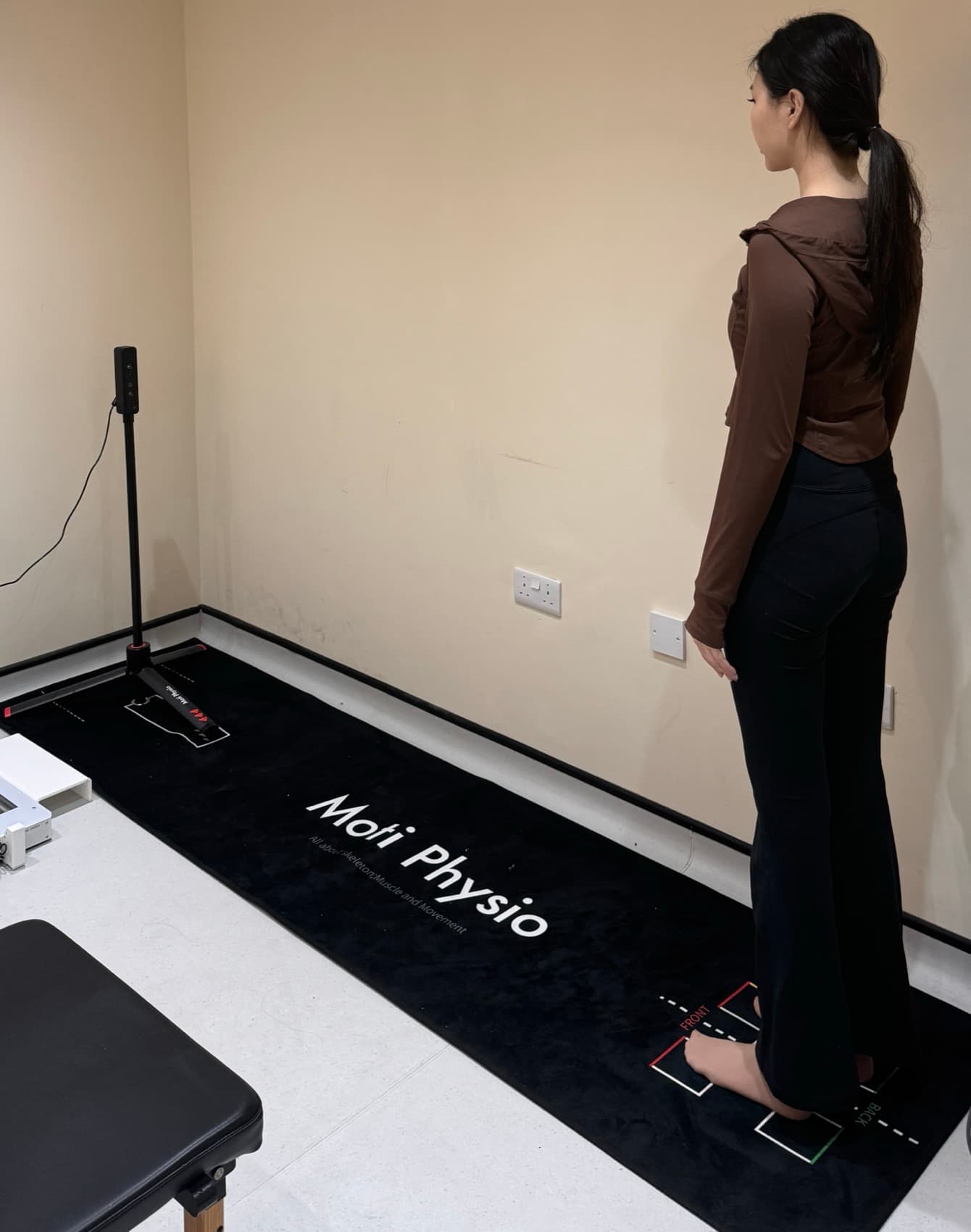
A 3D posture scan is a quick, non-invasive way of measuring how you stand and how your body is aligned. At UK Pain Clinic you stand on a scanning mat for a few seconds while our 3D posture analyser (MotiPhysio) captures your body from the front, side and back. Nothing is attached to you, there are no markers to stick on and there is no radiation. The whole scan takes under a minute, and the report is ready straight away for your clinician to go through with you.
Together with our 3D foot scan, the posture scan forms part of what we call Advanced Biomechanical Imaging: a measured picture of how you stand, load and move, used alongside a hands-on examination.
What the report shows
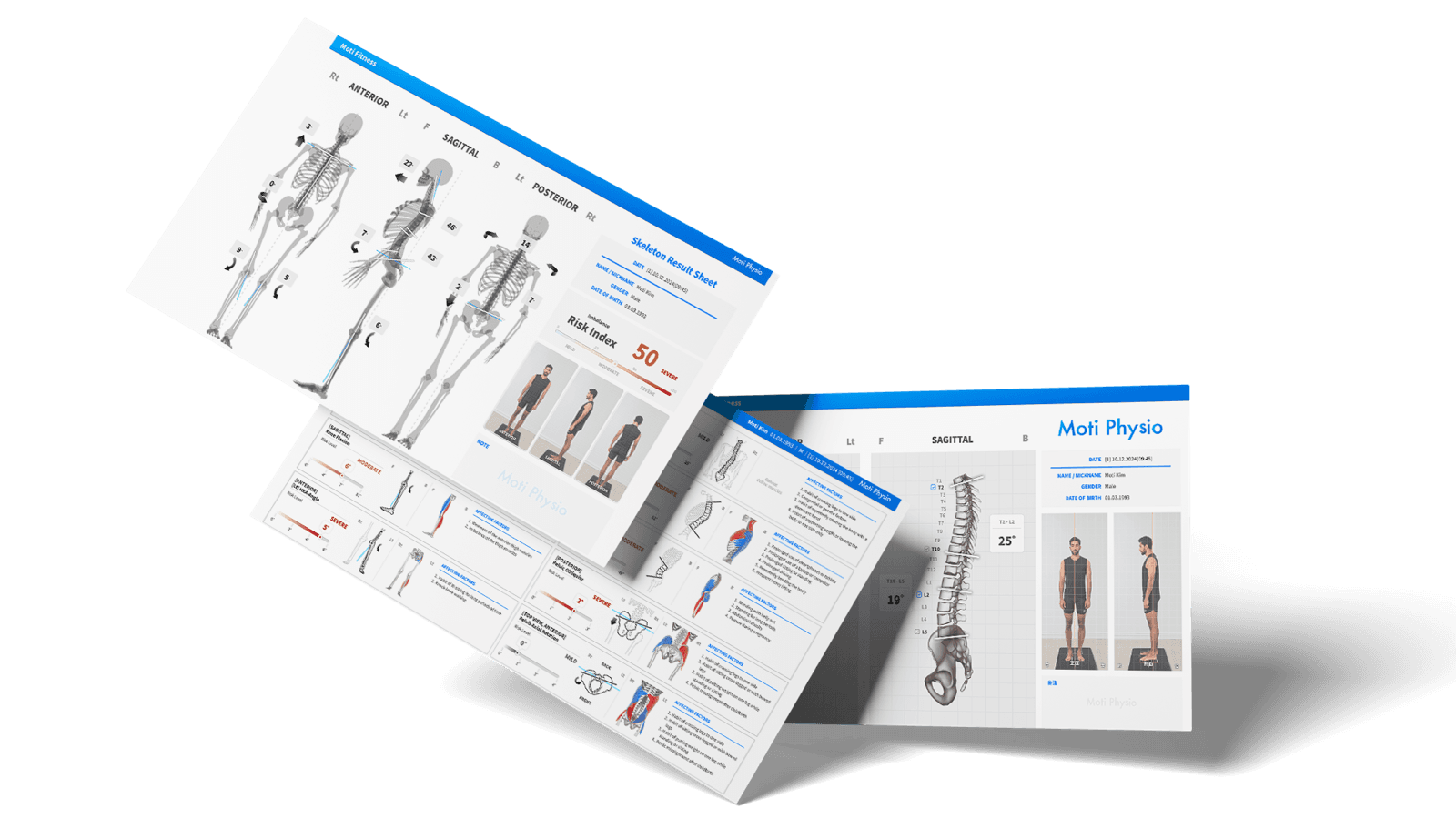
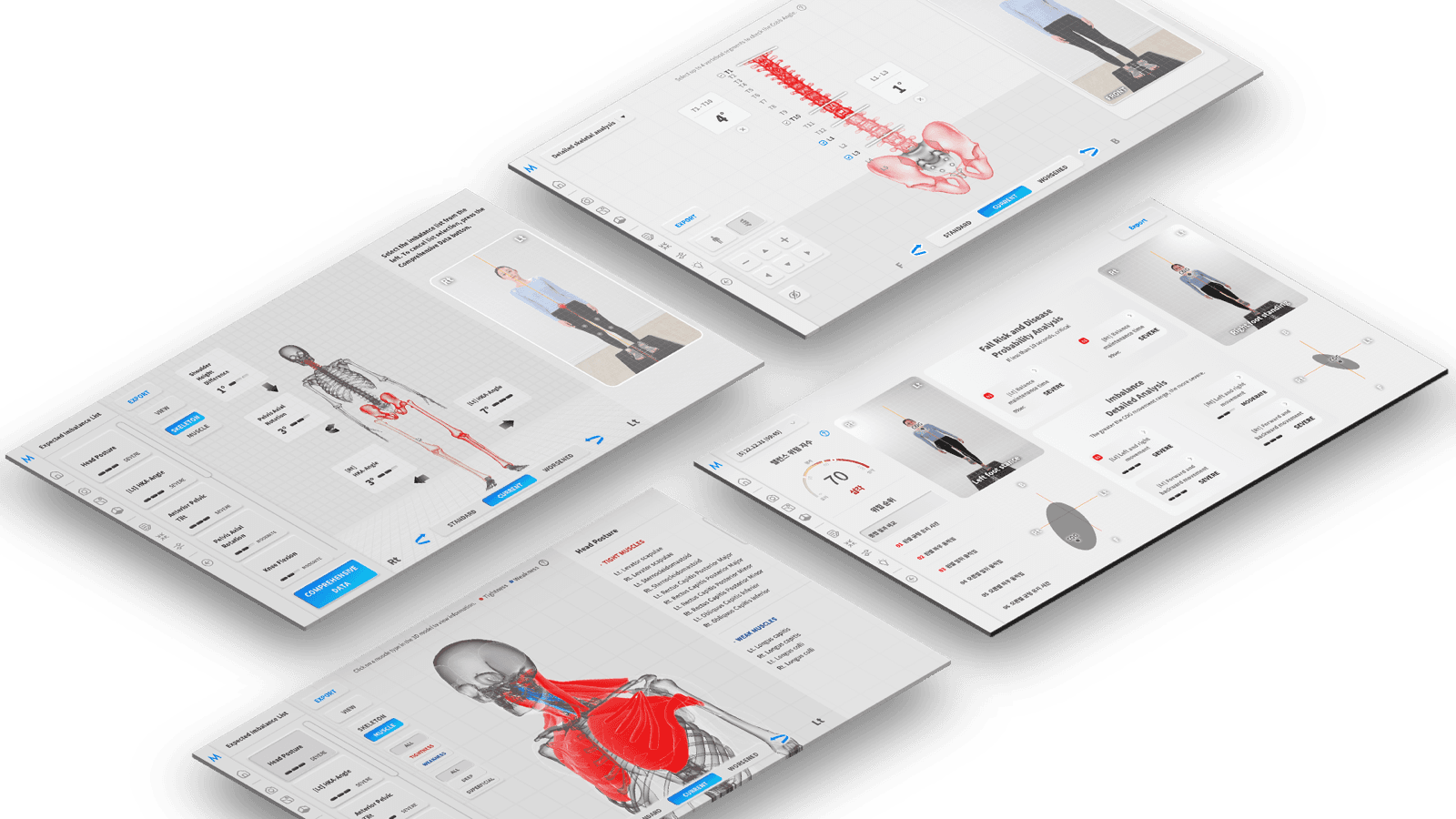
- Imbalance list – forward head angle, shoulder height difference, rounded shoulders, anterior pelvic tilt, pelvic rotation, knee flexion and hip–knee–ankle alignment, each graded mild, moderate or severe
- Risk index – a single 0–100 score summarising how far your posture is from the expected range
- Spine view – segment-by-segment curvature of the upper and lower back, with angle estimates
- Muscle map – which muscle groups are likely to be tight and which may be weak, shown on a 3D model
- Balance test (optional) – how much your centre of gravity sways standing on each leg
- Before-and-after comparison – later scans are overlaid on your first, so change over a course of care can be seen rather than guessed
You receive a printed or PDF copy to keep. Our guide what a 3D posture scan shows explains each item in more detail.
Who it may be useful for
- Desk workers with recurring neck, shoulder or upper-back ache — see office posture syndrome and our guide to tech neck
- People with a rounded upper back, such as postural kyphosis
- Anyone who wants a baseline before starting a corrective exercise programme, and a way to measure change over time
- Families who have noticed uneven shoulders or hips — the scan can flag asymmetry, but a suspected scoliosis still needs an X-ray to confirm
What happens at the scan
- Preparation – you wear close-fitting clothing (or shorts and a vest top) so the outline of your body can be seen, and remove shoes.
- Scanning – you stand relaxed on the mat, as you normally would, for a few seconds while the system captures the three views.
- Balance test (optional) – you stand on each leg in turn for a short time; your clinician stays beside you.
- Going through the report – your clinician explains the findings and, combined with your history and examination, which of them may be relevant to your symptoms.
The scan itself takes under a minute; with the explanation, allow about 15 minutes.
How often is it repeated?
A single scan is a snapshot. Many people have a repeat scan after several weeks of treatment and exercise, so that the before-and-after overlay can show whether things are changing. Your clinician will suggest when a rescan is worthwhile. Outcomes vary from person to person.
Who provides it
The scan and its interpretation are provided by our HCPC-registered physiotherapists and GCC-registered chiropractor as part of your assessment — see our team.
Cost
As a current offer, the advanced 3D posture scan is complimentary with every initial assessment. The standard price is on our fees page.
Limits, safety and who it is not suitable for
It is important to be clear about what the scan cannot do:
- It is not a diagnosis. It describes how you were standing at that moment. Posture is only one of many factors in pain: plenty of people have a forward head position or uneven shoulders and no pain at all, and research does not support the idea that a particular posture causes pain on its own. Your clinician decides which findings, if any, matter for you.
- It is not an X-ray or MRI. It measures the surface of the body and cannot see bones, discs, joints or nerves. If a structural problem is suspected, we will tell you and advise on imaging.
- It does not predict the future. A higher score does not mean you will develop pain, and a lower score does not rule anything out.
The scan uses no radiation and nothing touches you, so it is suitable for most people, including during pregnancy. You need to be able to stand unaided for a few seconds; the balance test is optional and is skipped if you feel unsteady.
Insurance
Insurers often treat scans and assessment tools differently from treatment. Please check with your insurer and check with us before you book.
Sources: CSP – 10 things you need to know about your back · Swain et al. 2020 – spine posture and low back pain, a systematic review of reviews
Frequently asked questions
- What system do you use for the posture scan?
We use a 3D posture analyser (MotiPhysio). You stand on a mat for a few seconds while it captures your body from the front, side and back — no markers, nothing attached to you and no radiation.
- Is a 3D posture scan a diagnosis?
No. It describes how you were standing at that moment, and posture is only one of many factors in pain. Your clinician combines it with your history and a hands-on examination to decide which findings, if any, matter. Read more in what a 3D posture scan shows.
- Is the posture scan the same as an X-ray?
No. It measures the surface of the body and cannot see bones, discs or nerves. If a structural problem such as scoliosis is suspected, we will advise on X-ray imaging.
- How much does the posture scan cost?
As a current offer, the advanced 3D posture scan is complimentary with every initial assessment. The standard price is on our fees page.
- Can posture scanning be combined with a foot scan?
Yes. Posture and foot scanning together make up our Advanced Biomechanical Imaging, which shows how you stand and load your feet. Outcomes of any treatment that follows vary from person to person.
This page is general information, not a diagnosis. A clinician will assess you before recommending any treatment. Outcomes vary from person to person. Read our full disclaimer