
Core treatments
3D Foot Scan & Custom Orthotics
3D foot scanning to assess arches and alignment, with fully custom orthotic insoles made in the UK.
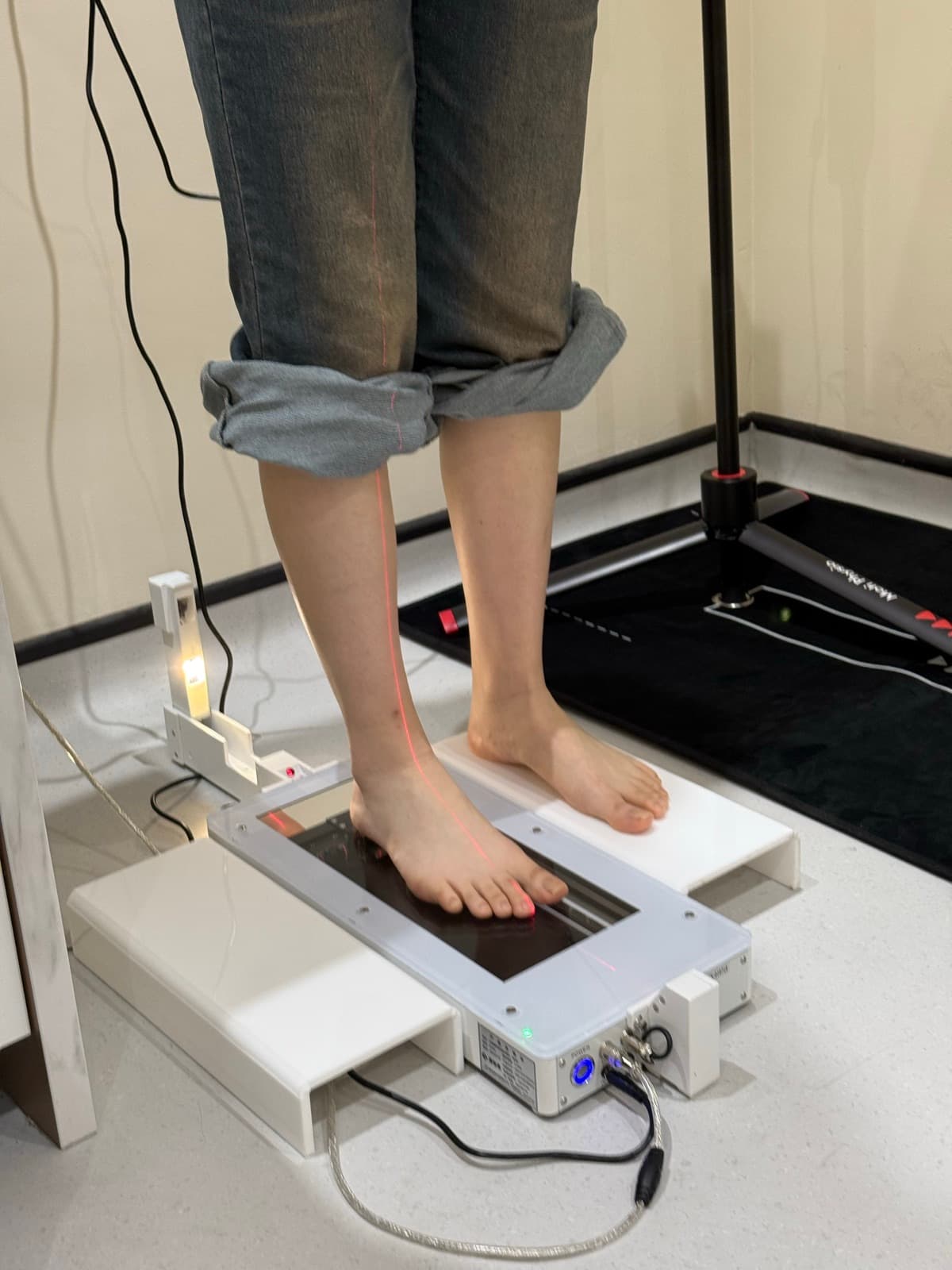
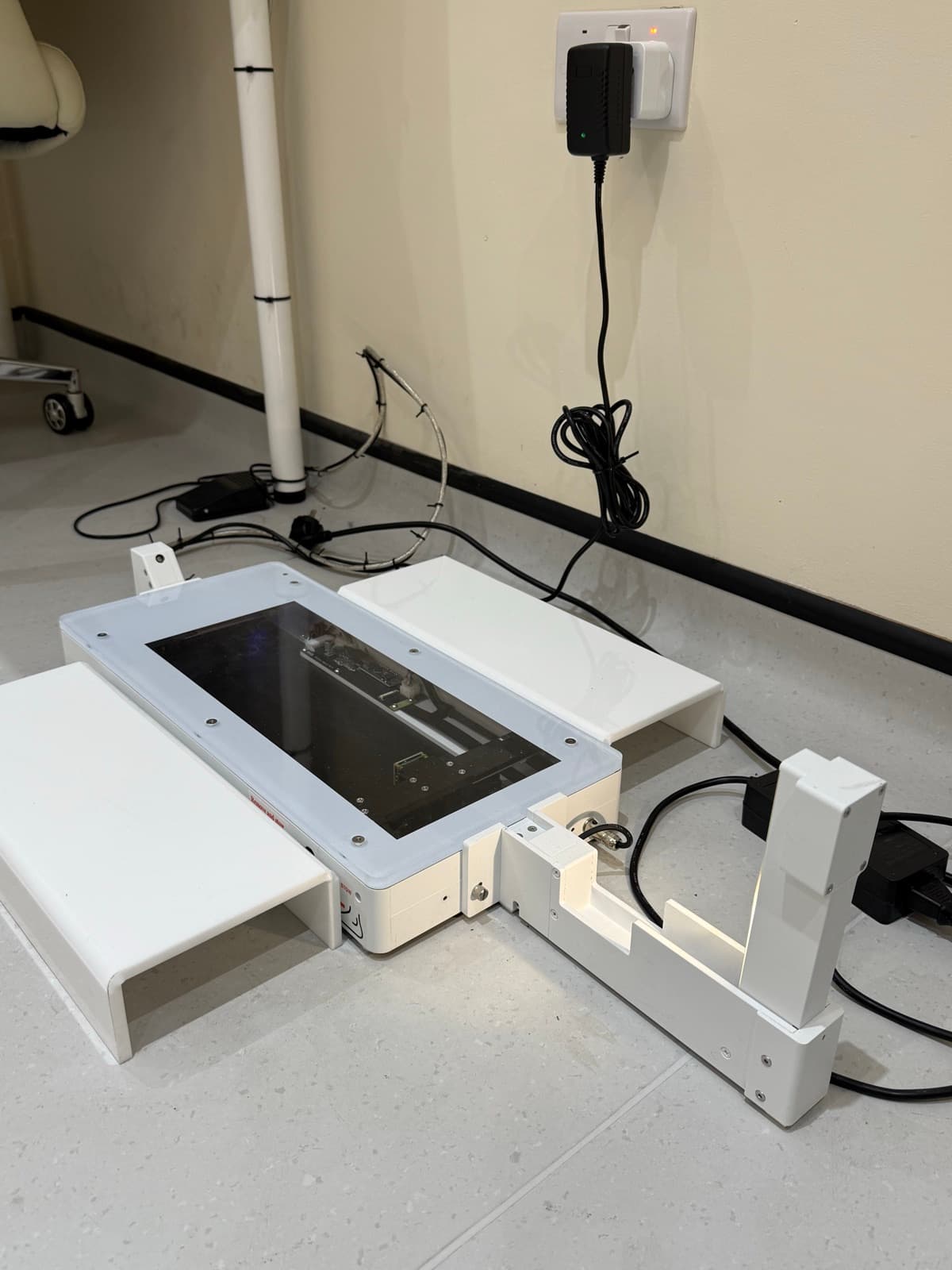
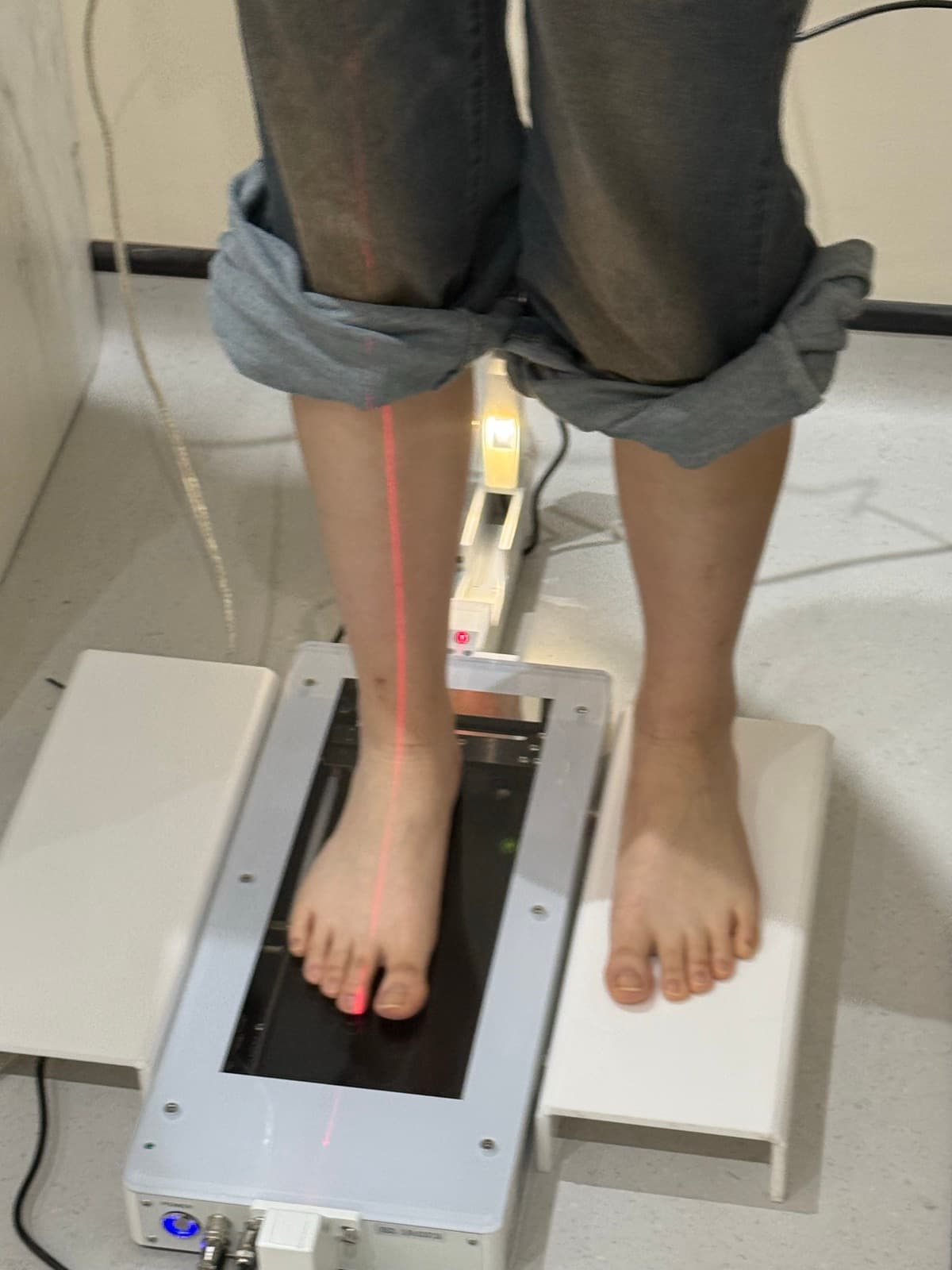
What is a 3D foot scan?
A 3D foot scan is a quick, painless way of measuring the shape of your feet and how your weight is spread across them. You stand on the scanning plate for a few seconds while the scanner records each foot. There is no radiation, and the results appear on screen straight away so your clinician can go through them with you.
The scan records:
- the height and shape of each arch (for example flat feet or high arches)
- how your weight is distributed across the heel, the outer edge and the ball of the foot
- whether the heel and big toe are aligned or angled inwards or outwards
- in-toeing or out-toeing, and any difference between the left and right foot
- how your foot position relates to knee alignment
Together with our 3D posture scan, the foot scan forms part of what we call Advanced Biomechanical Imaging: a measured picture of how you stand and load your body, used alongside a hands-on examination. The scan is a measuring tool, not a diagnosis.
What are custom orthotics?
Orthotics are insoles that sit inside your shoes to change how your feet are supported and loaded. Custom orthotics are made to the shape and loading pattern of your own feet, using your scan data and your clinician's prescription — which areas need support, cushioning or offloading, and how firm the device should be. Ours are fully bespoke and are made by a UK manufacturing laboratory.
The aim is not to "correct" your feet — most foot shapes are normal variations — but to redistribute load away from tissues that are being overworked, so that they have a better chance to settle.
What they may help with
Orthotics are usually considered when a foot-loading pattern seems to be contributing to pain and simpler measures, such as footwear changes and exercise, have not been enough. They may help with:
- Plantar fasciitis and persistent heel pain
- Painful flat feet or very high arches
- Pain under the ball of the foot, such as metatarsalgia or Morton's neuroma
- Bunion pain, where offloading the painful area may help
- Recurring lower-limb overload, such as shin splints, Achilles tendinopathy or kneecap pain, where foot mechanics appear to be part of the picture
Research on orthotics is mixed: they seem to help some people and some conditions more than others, and they tend to work better alongside exercise and sensible footwear than on their own. Part of a good assessment is telling you when you do not need orthotics — our guide do I need orthotics? explains who may and may not benefit.
What happens at the appointment
- Orthotics assessment – your clinician asks about your symptoms, activity and footwear, examines your feet, ankles and knees, and watches you walk.
- 3D foot scan – you stand on the scanning plate for a few seconds; the results are explained on screen.
- Recommendation – your clinician tells you honestly whether orthotics are likely to help, or whether something else, such as strengthening, footwear changes or other treatment, should come first.
- Ordering – if orthotics are recommended and you decide to go ahead, your scan and prescription are sent to the UK manufacturing laboratory. You will be told the expected delivery time when you order.
The orthotics assessment, including the scan, takes about 15 minutes.
How many visits?
Usually three steps: the assessment and scan, a fitting when your orthotics arrive, and a review a few weeks later. At the fitting we check comfort in your usual shoes and explain how to break them in: most people start with an hour or two a day and build up over one to two weeks. How long a pair lasts depends on use and activity; your clinician can advise when they need checking or replacing. Outcomes vary from person to person.
Who provides it
The foot scan, orthotics assessment and fitting are provided by our HCPC-registered physiotherapists and GCC-registered chiropractor — see our team.
Cost
Prices for the orthotics assessment (which includes the 3D foot scan) and for a pair of custom orthotics are on our fees page. If you have foot, leg or knee pain, we may suggest starting with an initial assessment so that the whole picture is examined.
Safety and who it is not suitable for
The scan uses no radiation and is suitable for most people. Orthotics are generally well tolerated, but they are probably not needed, or need extra care, if:
- you have flat feet or high arches that do not hurt — a foot shape on its own is not a reason for orthotics
- your pain is recent and already improving with rest and footwear changes
- the cause of your pain lies elsewhere, for example in the lower back or hip
- a child has flexible flat feet and no pain, which usually develop normally
- you have diabetes, reduced feeling in your feet, poor circulation or fragile skin — orthotics may still help, but fitting and skin checks need extra care, and your GP or a podiatrist may need to be involved
Stop wearing your orthotics and contact us if they cause new pain, blisters or numbness.
Insurance
Not every policy covers orthotics, and some policies cover the assessment but not the insoles. Please check with your insurer and check with us before you book.
Sources: NHS – Plantar fasciitis · NHS – Flat feet
Frequently asked questions
- Do I need orthotics?
Not always. A foot shape on its own is not a reason for orthotics; they are usually considered when foot loading seems to be contributing to pain and simpler measures have not been enough. Your clinician will tell you honestly — see do I need orthotics?.
- What does the 3D foot scan show?
Arch height and shape, how your weight is spread across the heel, outer edge and ball of the foot, heel and big-toe alignment, left–right differences and how your foot position relates to your knees. It is a measuring tool, not a diagnosis.
- Where are your custom orthotics made?
They are fully bespoke and made by a UK manufacturing laboratory from your scan data and your clinician's prescription. You will be told the expected delivery time when you order.
- How long does it take to get used to orthotics?
Most people start with an hour or two a day and build up over one to two weeks. If they cause new pain, blisters or numbness, stop wearing them and contact us. Outcomes vary from person to person.
- Are orthotics covered by insurance?
Not every policy covers orthotics, and some policies cover the assessment but not the insoles. Please check with your insurer and check with us before you book.
This page is general information, not a diagnosis. A clinician will assess you before recommending any treatment. Outcomes vary from person to person. Read our full disclaimer