
Core treatments
Cupping Therapy
Suction cups to release fascial tension and reduce muscle fatigue.
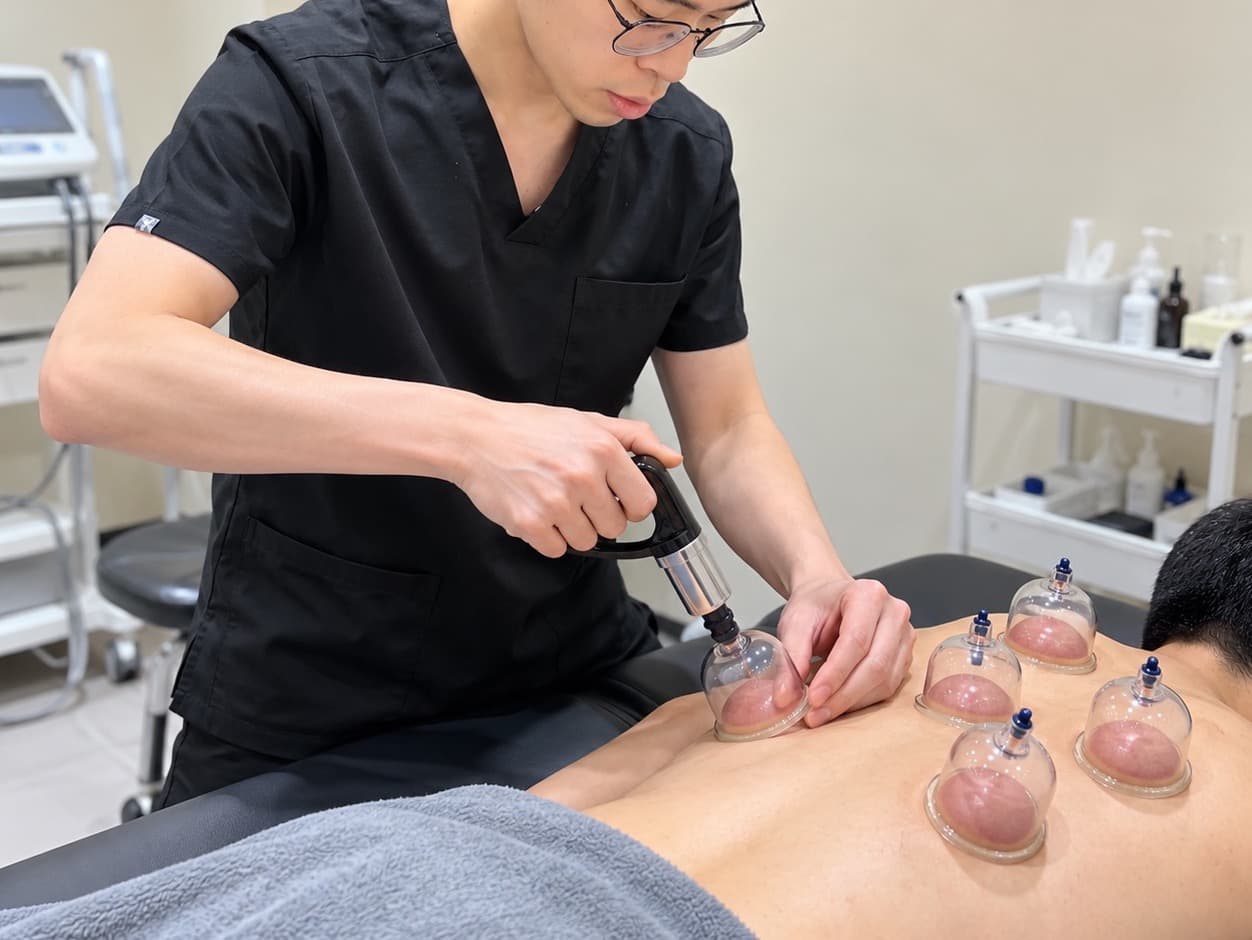
What is cupping?
Cupping uses cups placed on the skin with gentle suction, which lifts the skin and the soft tissue beneath it rather than pressing down on it. At UK Pain Clinic cupping is used as a soft-tissue technique within physiotherapy, alongside hands-on treatment and exercise. It is not offered as a traditional or stand-alone therapy, and nothing is cut or injected.
Cups may be left in one place for a few minutes ("static" cupping), or moved slowly over the muscle with a little oil ("sliding" cupping). The aim is to ease the feeling of muscle tightness and help you move more comfortably, so that exercise and rehabilitation are easier.
What it may help with
- Upper-back and shoulder tension, such as trapezius and rhomboid strain
- Mid and upper back pain
- Lower back muscle strain
- Neck pain linked to tight muscles, for example from long hours at a desk (see our desk neck and back pain guide)
- Muscle tightness and fatigue after sport or training
The evidence for cupping is limited. Reviews have found some studies suggesting it may help short-term pain, but many of those studies are small or of low quality, so it is hard to say how much of any effect is specific to cupping. We use it as one optional part of your plan, never instead of exercise and advice.
What happens in a session
- Assessment first – your physiotherapist examines you and discusses whether cupping is a reasonable option for you.
- Preparation – the skin is checked and, for sliding cupping, a little oil is applied.
- Cupping – cups are placed on the area and the suction is adjusted to what feels comfortable. You should feel a pulling or stretching sensation, not sharp pain.
- Afterwards – the cups are removed and treatment usually continues with movement or exercise.
Cupping usually takes around 15 minutes of your appointment.
Marks after cupping
Static cupping often leaves round, bruise-like marks where the cups were placed. They are usually painless or only slightly tender and fade over a few days to about a week or two. Sliding cupping tends to leave redness rather than distinct circles. If visible marks would be a problem for you, for example before an event, please tell your physiotherapist.
How many sessions?
Cupping is used only when it fits your plan, often over a few visits, and your physiotherapist will review whether it is helping. Outcomes vary from person to person.
Who provides it
Cupping is provided by Julius Cheuk Chung, an HCPC-registered Chartered Physiotherapist (MCSP), as part of physiotherapy treatment. See our team.
Cost
Cupping is an add-on treatment: it is added to an initial assessment or follow-up visit and cannot be booked on its own. The add-on price is on our fees page.
Safety and who it may not suit
Cupping is generally well tolerated. Apart from the marks, mild tenderness or itching for a day or two can occur. Cupping is avoided or adapted:
- over broken, inflamed or infected skin, or skin conditions such as eczema or psoriasis at the area
- if you have a bleeding disorder or take blood-thinning (anticoagulant) medication
- during pregnancy over the abdomen and lower back
- over varicose veins or areas of poor circulation
- on fragile or thin skin, for example after long-term use of some medicines or in older age
- over a recent injury, fracture or area of significant swelling
Your physiotherapist will screen for these before treatment.
Insurance
Cupping is usually given as part of a physiotherapy session, and policies differ in what they cover. Please check with your insurer and check with us before you book.
Sources: Cao et al. 2012 – an updated review of the efficacy of cupping therapy (PLOS One)
Frequently asked questions
- Does cupping hurt?
Most people feel a pulling or stretching sensation rather than pain. The suction is adjusted to what you find comfortable, and mild tenderness for a day or two can occur.
- How long do cupping marks last?
The round, bruise-like marks usually fade over a few days to about a week or two. They are not usually painful. Tell your physiotherapist if visible marks would be a problem.
- Is cupping here a traditional therapy?
No. Here cupping is used as a soft-tissue technique within physiotherapy, alongside hands-on treatment and exercise, by Julius Cheuk Chung. The evidence for it is limited and outcomes vary.
- Can I book cupping on its own?
No. Cupping is an add-on that is added to an initial assessment or follow-up physiotherapy visit with Julius. See our fees.
- Is cupping covered by insurance?
It is usually given within a physiotherapy session, and policies differ. Please check with your insurer and check with us before you book.
This page is general information, not a diagnosis. A clinician will assess you before recommending any treatment. Outcomes vary from person to person. Read our full disclaimer