
Core treatments
Kinesiology Taping
Elastic tape applied to support joints and muscles and aid recovery between sessions.
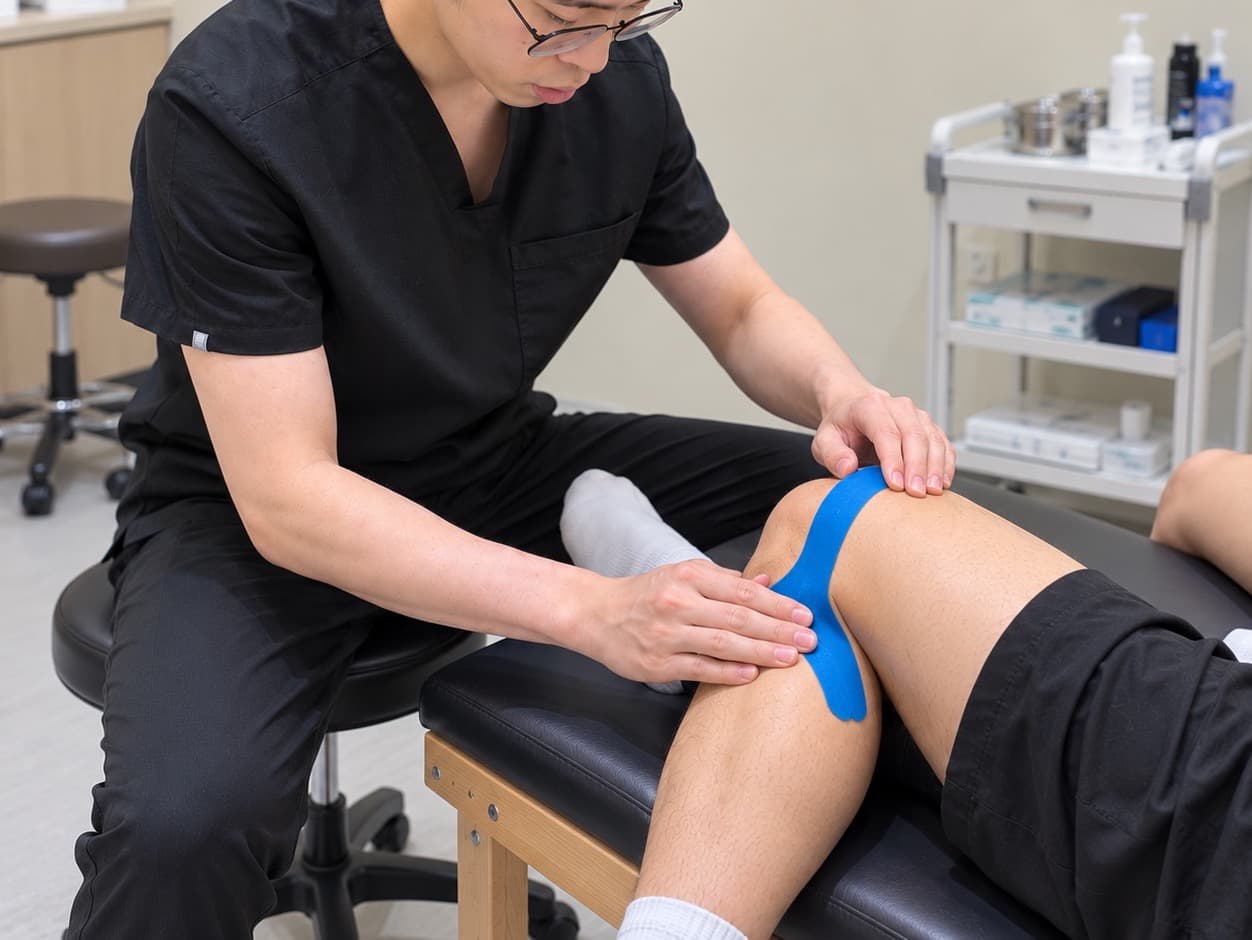
What is kinesiology taping?
Kinesiology tape is a thin, stretchy cotton tape with a skin-friendly adhesive. Unlike rigid sports tape, it does not stop a joint from moving. It is applied with a measured amount of stretch, so it moves with you while giving gentle support and a feeling of feedback through the skin.
That feedback may help you become more aware of how you are moving, and some people find it makes an area feel more supported or comfortable during activity. The tape does not repair tissue; it is used to help you keep active and carry on with your exercises between appointments.
What it may help with
- Ankle support after an ankle sprain (see our sprained ankle recovery guide)
- Front-of-knee pain such as patellofemoral pain and patellar tendinopathy
- Shin splints and other running injuries
- Shoulder pain such as shoulder impingement, as a reminder for shoulder position during exercise
- Lower back pain, including back and pelvic pain in pregnancy
- Mild swelling after injury, using a lighter "fan" pattern
The evidence for kinesiology taping is modest. Research suggests it may help reduce pain and improve function in the short term for some conditions, such as some types of low back pain, but effects over the longer term are less clear and are often similar to other treatments. We use it alongside exercise and hands-on treatment, not instead of them.
What happens in a session
- Assessment first – your clinician examines you and decides whether taping may help, and which pattern to use.
- Skin check – the skin should be clean, dry and free of lotion. Hair may need trimming for the tape to stick well.
- Application – the tape is cut to size and applied with a set amount of stretch while you hold a particular position.
- Advice – your clinician explains how long to keep the tape on, what to look out for and how to remove it.
Taping usually takes around 15 minutes of your appointment.
Wearing the tape
- The tape can usually stay on for around 3–5 days.
- You can shower with it on. Pat it dry gently with a towel afterwards; avoid rubbing it or using a hot hairdryer on it.
- Rub the tape lightly after application, and avoid applying moisturiser over it.
- To remove it, peel it back slowly in the direction of hair growth while pressing the skin down; a little baby oil can help loosen it.
- Take the tape off straight away if your skin becomes itchy, red, blistered or sore, or if pain, numbness or tingling increases.
How many sessions?
Taping is usually used for a short period, for example while you return to sport after an injury, and then reduced as your strength and confidence improve. Your clinician may also show you how to apply simple taping yourself. Outcomes vary from person to person.
Who provides it
Kinesiology taping is offered by all three of our clinicians: HCPC-registered physiotherapists Tim Tsui and Julius Cheuk Chung, and GCC-registered Dr Lok Sze Candice Wong (Chiropractor). See our team.
Cost
Kinesiology taping is an add-on treatment: it is added to an initial assessment or follow-up visit and cannot be booked on its own. The add-on price is on our fees page.
Safety and who it may not suit
Taping is generally well tolerated, but some people react to the adhesive. If you have sensitive skin or a history of reactions to plasters or tape, a small test strip can be applied first. Taping is avoided or adapted:
- over broken, healing or infected skin, or areas of active eczema, psoriasis or sunburn
- if you have a known allergy to tape or adhesive
- on very fragile or thin skin
- over an area with a suspected blood clot (deep vein thrombosis) or significant unexplained swelling
- over areas of reduced skin sensation, or where you could not easily notice a reaction
Your clinician will screen for these before treatment.
Insurance
Taping is usually given as part of a physiotherapy or chiropractic session, and policies differ in what they cover. Please check with your insurer and check with us before you book.
Frequently asked questions
- How long can I keep kinesiology tape on?
Usually around 3–5 days. Take it off sooner if your skin becomes itchy, red or sore, or if your symptoms get worse.
- Can I shower with the tape on?
Yes. Pat the tape dry gently with a towel afterwards, and avoid rubbing it or using a hot hairdryer on it.
- Does kinesiology tape work?
The evidence is modest. Research suggests it may help pain and function in the short term for some conditions, but it is not a replacement for exercise. Outcomes vary from person to person.
- Can I book taping on its own?
No. Taping is an add-on that is added to an initial assessment or follow-up visit after your clinician has checked it is suitable. See our fees.
- What if I react to the tape?
Remove it slowly and gently, and let your clinician know. If you have sensitive skin, a small test strip can be applied first, or another option can be used instead.
This page is general information, not a diagnosis. A clinician will assess you before recommending any treatment. Outcomes vary from person to person. Read our full disclaimer